


Ebonyi Governor Urges Rotational Presidency To Address Southeast Marginalisation.
Ebonyi State Governor, Francis Nwifuru, has called for the presidency of Nigeria to rotate among the country’s six geopolitical zones to ensure equity and fairness in national leadership. Speaking at his office in Centenary City, Abakaliki, during a visit from the Senate Committee on the Review of the 1999 Constitution, the governor described the exclusion of the Southeast geopolitical zone from the presidency since Nigeria’s return to democracy in 1999 as a profound injustice.
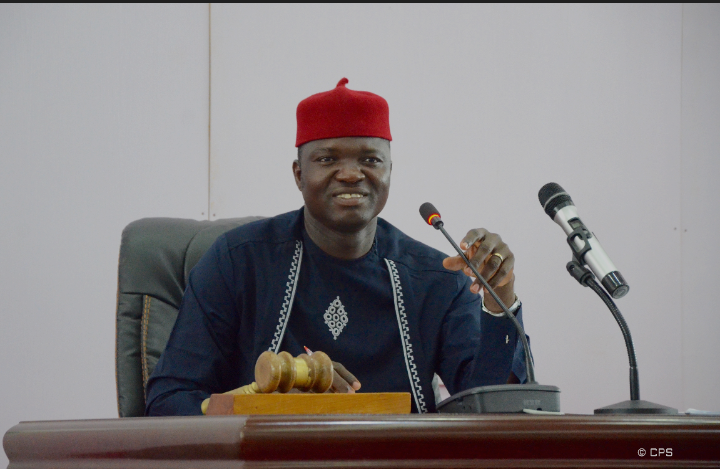
Governor Nwifuru argued that the current geopolitical structure, which divides Nigeria into six zones—Northwest, Northeast, North Central, Southwest, Southeast, and South-South—should facilitate equal access to the nation’s highest office. “That the Southeast geopolitical zone has not occupied the position of the president since 1999 is an injustice,” he stated. “What is the essence of the geopolitical zone structure if the office of the president cannot be tested by all the zones?” His remarks underscore a long-standing sentiment in the Southeast, which has yet to produce a president in Nigeria’s Fourth Republic, unlike other zones that have held the position multiple times.

The governor’s advocacy for a rotational presidency aligns with broader calls for constitutional reform to address regional imbalances. He also proposed the creation of an additional state in the Southeast to rectify the region’s structural disadvantage, as it currently has only five states compared to the six or seven in other zones. “To end regional squabbles permanently, I urge the National Assembly to ensure marginalisation and structural imbalances are constitutionally addressed,” Nwifuru said, highlighting how the disparity in state numbers fuels resentment among the people of the Southeast.
In addition to his push for rotational presidency and state creation, Governor Nwifuru called for a review of Section 308 of the 1999 Constitution, which grants immunity to certain public officials. He proposed extending this immunity to include the Senate President, Deputy Senate President, Speaker of the House of Representatives, Deputy Speaker, and Speakers and Deputy Speakers of State Assemblies. This, he argued, would strengthen legislative leadership and ensure stability in governance.
Nwifuru’s comments were made during a courtesy visit by the Senate Committee on Constitution Review, led by Deputy Chief Whip Senator Onyekachi Nwebonyi. The committee was in Ebonyi for a public hearing on the review of the 1999 Constitution, prompted by growing demands for amendments to reflect Nigeria’s evolving political and social realities. Senator Nwebonyi noted the governor’s prior engagement with constitutional review processes, referencing Nwifuru’s tenure as Speaker of the Ebonyi State House of Assembly.
The governor’s call for a rotational presidency echoes sentiments expressed by other leaders in the Southeast, including Enugu State Governor Peter Mbah, who recently advocated for similar reforms at a zonal public hearing in Enugu. Proponents argue that such a system would foster national unity and give every region a sense of belonging in Nigeria’s governance structure.
As Nigeria continues to grapple with issues of ethnic and regional representation, Governor Nwifuru’s proposals add momentum to the ongoing debate about restructuring the country’s political framework. His emphasis on fairness and inclusion highlights the need for constitutional changes to address long-standing grievances and promote a more equitable federation.
