


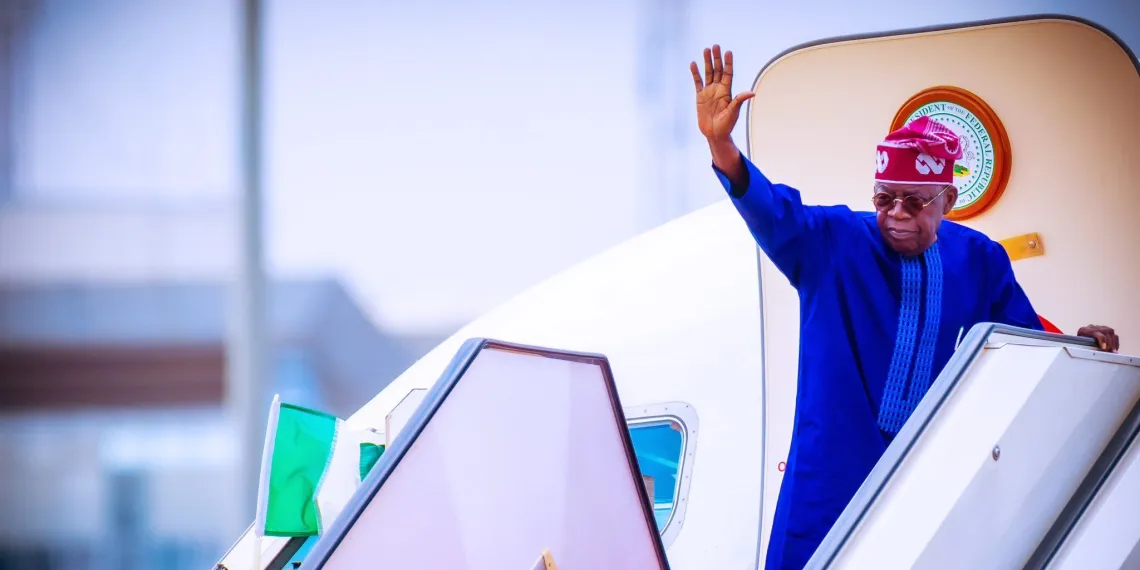
President Tinubu To Embark On Historic Visit To Saint Lucia And Brazil For BRICS Summit.
President Bola Ahmed Tinubu is set to depart Abuja on Saturday, 28 June 2025, for a significant two-nation visit to Saint Lucia and Brazil, marking a pivotal moment in Nigeria’s efforts to strengthen diplomatic and economic ties within the Global South. The announcement was made by the President’s Special Adviser on Information and Strategy, Bayo Onanuga, in a statement issued on Friday.
The President’s first stop will be Saint Lucia, where he will undertake a state visit aimed at deepening Nigeria’s engagement with Caribbean nations and fostering South-South cooperation. During his stay from 28 June to 4 July, President Tinubu will engage in a series of high-level activities to bolster bilateral relations. A key highlight will be his address to a special joint session of the Senate and House of Assembly of Saint Lucia on 30 June at the William Jefferson Clinton Ballroom, Sandals Grande, Gros Islet. The session will be attended by Heads of Government from the Organisation of Eastern Caribbean States (OECS), senior officials, members of the diplomatic corps, the Nigerian community in Saint Lucia, and Dr Didacus Jules, Director-General of the OECS.

In Saint Lucia, President Tinubu will pay courtesy calls on Governor-General His Excellency Cyril Errol Melchiades Charles and Prime Minister Philip J. Pierre. He will also participate in a high-level working luncheon with OECS Heads of Government to discuss economic partnerships, educational linkages, infrastructure development, and cultural cooperation. Additionally, the President will visit the Sir Arthur Lewis Community College in Castries to promote academic and research exchanges between Nigeria and the Caribbean nation. The visit, which includes a private reception hosted by Prime Minister Pierre, underscores Nigeria’s commitment to the African Union’s Sixth Region framework, recognising the African diaspora as a vital partner in the continent’s development.
Following his engagements in Saint Lucia, President Tinubu will travel to Rio de Janeiro, Brazil, to attend the 17th BRICS Summit from 6 to 7 July 2025. Invited by Brazilian President Luiz Inácio Lula da Silva, Tinubu will participate as a representative of Nigeria, which holds ‘partner country’ status—a designation above guest status but below full BRICS membership. The summit, themed “Strengthening Global South Cooperation for More Inclusive and Sustainable Governance,” will focus on enhancing collaboration across the Global South and fostering BRICS partnerships for social, economic, and environmental development. Discussions are expected to cover global financial governance reform, climate finance, multilateral trade, and digital transformation in developing economies.
Nigeria’s participation in the BRICS Summit follows its recognition as a partner country in January 2025, alongside nations such as Algeria, Belarus, Bolivia, Cuba, Kazakhstan, Malaysia, Thailand, Turkey, Uganda, Uzbekistan, and Vietnam. South Africa, Egypt, and Ethiopia remain Africa’s full BRICS members. The summit offers Nigeria an opportunity to engage with global leaders and advance its economic and diplomatic objectives on the international stage.
President Tinubu will be accompanied by senior government officials for both legs of the trip, which is expected to pave the way for new pathways in infrastructure development, educational cooperation, youth empowerment, and diplomatic exchange. In Saint Lucia, local authorities have advised residents to anticipate temporary traffic disruptions due to the visit, with security measures including a convoy of at least 25 vehicles and brief closures of the George F.L. Charles and Hewanorra International Airports.
This historic visit, blending official engagements with a personal vacation for the President, highlights Nigeria’s growing commitment to forging meaningful ties with Caribbean states and emerging economies. As Saint Lucia’s Deputy Prime Minister Ernest Hilaire noted, the visit is an honour and an opportunity to strengthen cultural and historical bonds rooted in shared African heritage.
