


President Tinubu Urges West African Unity For Economic Transformation At Inaugural Summit.
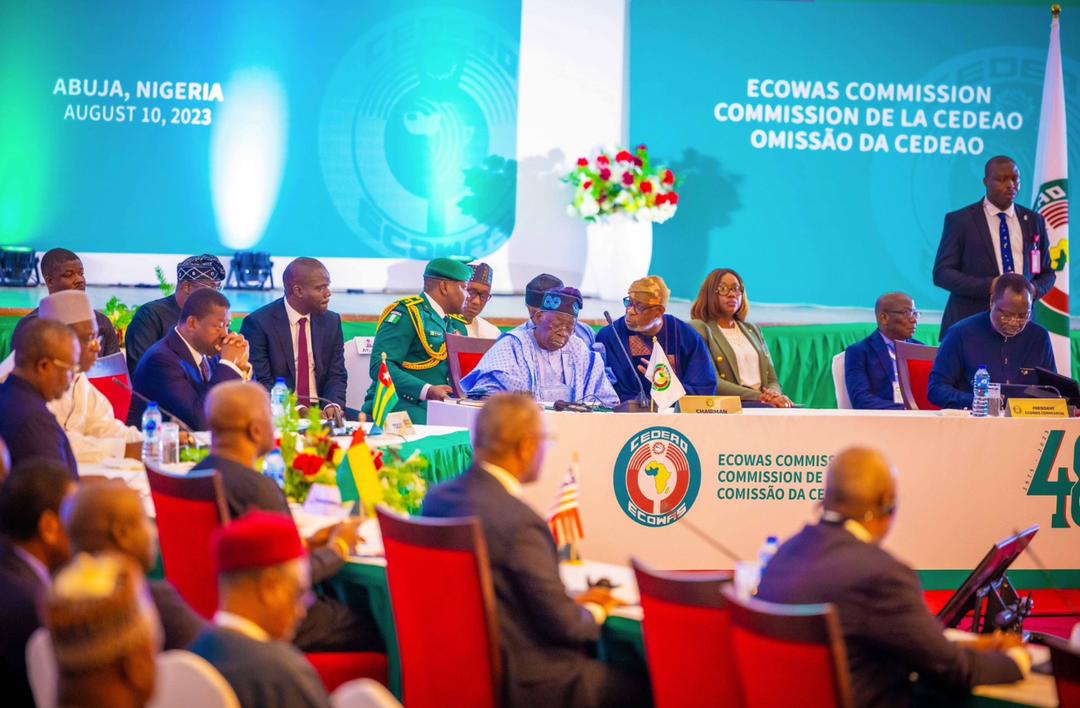
Abuja, Nigeria – President Bola Ahmed Tinubu has called for a unified approach to economic development across West Africa, urging regional leaders to harness the subregion’s youthful population and vast natural resources to drive industrialisation, education, and innovation. Speaking at the inaugural West Africa Economic Summit (WAES) on Saturday, 21 June 2025, at the Bola Ahmed Tinubu International Conference Centre in Abuja, Tinubu, who also serves as Chairman of the ECOWAS Authority of Heads of State and Government, emphasised the urgent need for coordinated policies to unlock the region’s economic potential.
The summit, themed “One Voice, One Future,” brought together heads of state from ECOWAS member countries, including Ghana, Liberia, Sierra Leone, Senegal, The Gambia, Benin, Togo, and Guinea-Bissau, alongside ministers of finance, trade, infrastructure, and foreign affairs. Representatives from key regional bodies such as the West African Monetary Agency (WAMA), ECOWAS Bank for Investment and Development (EBID), and the African Continental Free Trade Area (AfCFTA) Secretariat, as well as private sector leaders and global investors, also attended. Tinubu extended invitations to non-ECOWAS nations, including the Alliance of Sahelian States and Mauritania, underscoring his commitment to inclusive regional dialogue.

In his keynote address, President Tinubu described West Africa’s youthful population as its greatest asset but warned that this demographic promise could become a liability without significant investments in education, digital infrastructure, and productive enterprises. “We cannot afford to miss the next industrial revolution,” he declared, urging the region to shift from exporting raw materials to developing value-added industries. “The era of ‘pit to port’ must end. We must turn our mineral wealth into domestic economic value—jobs, technology, and manufacturing.”
Tinubu highlighted the region’s low intra-regional trade, which remains below 10%, as a critical challenge, attributing it to a “failure of coordination” rather than a lack of ambition. He called for the dismantling of trade barriers, enhanced infrastructure connectivity, and policy alignment to boost regional supply chains, energy networks, and data frameworks. “West Africa must coordinate or collapse in the race for global economic relevance,” he warned, stressing that no single country can achieve prosperity in isolation.
The Nigerian leader cited his country’s investments in skills development, digital connectivity, and youth empowerment as examples of steps toward regional cooperation. He also praised Nigeria’s economic reforms, including exchange rate adjustments and alignment with the AfCFTA, which have boosted non-oil exports by 24% to $1.8 billion in the first quarter of 2025.
The WAES, a flagship initiative of Tinubu’s Renewed Hope foreign policy, aims to deepen economic integration and position West Africa as a prime destination for global investment. The summit featured investment matchmaking forums and country-specific presentations showcasing national reform agendas, including Nigeria’s infrastructure drive and green economy initiatives.
Tinubu urged participants to deliver actionable outcomes, including a renewed commitment to easing business operations, enhancing intra-regional trade, and fostering innovative ideas to lift people from poverty to prosperity. “Let us build a West Africa that is investable, competitive, and resilient—one that leads with vision, responsibility, and unity,” he said, describing this as the “new West African proposition.”
The summit, which concluded on Saturday, precedes the 67th Ordinary Summit of ECOWAS on Sunday, 22 June 2025, at the State House Conference Centre in Abuja. Analysts and attendees expressed optimism that the WAES will yield concrete deliverables to fast-track West Africa’s integration agenda, seen as vital for sustainable peace, security, and prosperity. Posts on X echoed this sentiment, with users noting Tinubu’s call for unity and practical action to boost regional trade and economic growth.
As West Africa stands at a pivotal moment, President Tinubu’s vision for a coordinated, prosperous region has set the stage for transformative collaboration, with the potential to reshape the subregion’s economic future.
