


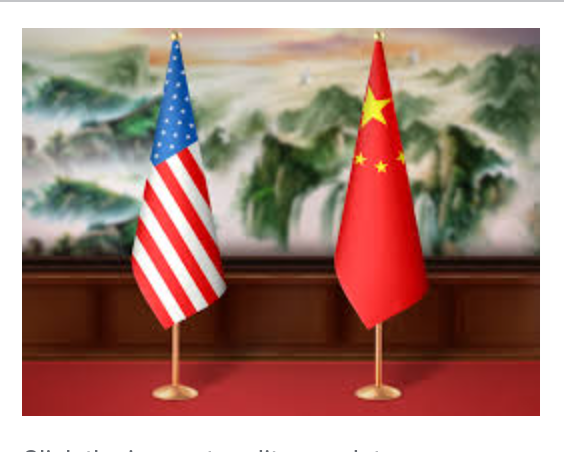
US And China Agree To Slash Tariffs In Major Trade War De-escalation.
In a significant step towards easing tensions in the ongoing trade war between the world’s two largest economies, the United States has agreed to reduce tariffs on Chinese imports from a staggering 145% to 30% for a 90-day period, effective from 14 May. In a reciprocal move, China will lower its tariffs on US goods from 125% to 10% over the same timeframe, following productive talks held in Geneva over the weekend.
The breakthrough agreement, announced by US Treasury Secretary Scott Bessent, marks the first major de-escalation since President Donald Trump imposed steep tariffs on Chinese imports, sparking fears of a global recession and causing turmoil in financial markets. “What had occurred with these very high tariffs was the equivalent of an embargo, and neither side wants that,” Bessent said. “We want trade, more balanced trade, and I think both sides are committed to achieving that.”

China’s commerce ministry hailed the deal as an “important step to resolve differences” and a foundation for deeper cooperation. Vice Premier He Lifeng, who represented China in the talks, described the discussions as “candid” and productive, expressing optimism about future negotiations. A joint statement confirmed that both nations will establish a mechanism to continue discussions, with further talks potentially taking place in the US, China, or a third-party nation.
The agreement has been met with widespread relief in global markets. Hong Kong’s Hang Seng Index surged by 3% following the announcement, while early indications suggest US stock markets could open 2-3% higher. European stocks also rose in early trading, reflecting renewed investor confidence. Danish shipping giant Maersk welcomed the pause, with its shares trading 12.9% higher, calling it “a step in the right direction.”
The tariff reductions come after months of escalating tit-for-tat measures that saw US duties on Chinese goods reach 145%, while China retaliated with 125% tariffs on American products. These levies, combined with the elimination of the de minimis exemption for Chinese imports, had led to a sharp decline in shipments, with US retailers warning of potential product shortages and price hikes. The Port of Los Angeles reported a 10% drop in shipments last week compared to the previous year, and container bookings from China to the US fell by as much as 60% in some estimates.
Analysts note that while the 30% US tariff on Chinese imports remains high, the reduction from 145% is a significant olive branch. “It’s a bigger cut than expected, but 30% is still a substantial barrier,” said BBC correspondent Theo Leggett. In Beijing, Laura Bicker reported that Chinese officials had grown increasingly concerned about the economic impact of the tariffs, which Bessent acknowledged last month as “unsustainable.”
Social media platforms, including X, buzzed with reactions to the news. One user remarked, “Great for short-term rally, long term still a disaster,” while others expressed cautious optimism about the potential for a greener market in the coming months.
The 90-day pause offers a window for both nations to negotiate a more permanent solution to their trade disputes. However, the US measures still include additional components aimed at pressuring Beijing to curb the illegal trade in fentanyl, a powerful opioid. Meanwhile, China’s reduced 10% tariff on US goods signals a willingness to engage in further dialogue, though Beijing has hinted at other countermeasures if tensions escalate again.
As the world watches, the agreement provides a much-needed respite from the economic uncertainty that has gripped global markets. Whether this truce will lead to a lasting resolution remains to be seen, but for now, the prospect of renewed trade stability has brought a sigh of relief to businesses and consumers alike.
