


Tinubu Reaffirms Commitment To Multi-Party Democracy In Nigeria.
President Bola Tinubu has firmly dismissed speculations that his administration is steering Nigeria towards a one-party state, emphasising his unwavering commitment to multi-party democracy. In a passionate address to a joint session of the National Assembly on Democracy Day, 12 June 2025, the President declared, “At no time in the past, nor any instance in the present, and at no future juncture shall I view the notion of a one-party state as good for Nigeria.”
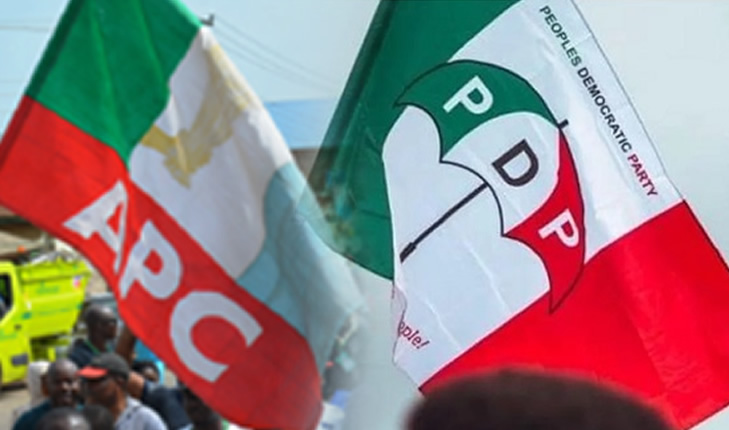
The statement comes amid growing concerns from opposition parties, including the People’s Democratic Party (PDP), Labour Party (LP), and New Nigeria People’s Party (NNPP), who have accused the ruling All Progressives Congress (APC) of orchestrating defections to consolidate political dominance. The wave of defections, including high-profile figures such as Governors Sheriff Oborevwori of Delta State and Umo Eno of Akwa Ibom, has fuelled fears of a shrinking democratic space.


Addressing these concerns, Tinubu drew on his political history as a staunch defender of democracy, recalling his stand as the last progressive governor in the South-West during the 2003 elections, when the then-ruling PDP sought to eliminate opposition. “Even with all their numbers and false grandeur, they boasted of ruling, not governing, Nigeria for the next half century or more. Where are they now?” he asked, underscoring that Nigeria’s democratic destiny is guided by a “greater power.”
The President firmly denied allegations of manipulating the Independent National Electoral Commission (INEC) to deregister opposition parties, stating, “I have never attempted to alter any political party registration with INEC.” He also took a swipe at the opposition, suggesting their internal disarray, rather than any orchestrated effort by the APC, was responsible for their weakening position. “Political parties fearful of members leaving might be better served by examining their internal processes,” Tinubu remarked, adding, “For me, I would say try your best to put your house in order. I will not help you do so.”
Tinubu’s comments have sparked varied reactions. The PDP, in a statement by its National Publicity Secretary, Debo Ologunagba, urged Nigerians to resist what it called a “plot to foist a despotic one-party regime.” Meanwhile, some APC members, including Senator Ali Ndume, have also cautioned against one-party dominance, warning that it signals “the death of democracy.”
However, Tinubu maintained that the APC’s growing support stems from its achievements, citing economic reforms and increased foreign direct investment as evidence of progress. At the APC Renewed Hope Agenda Summit in May 2025, he attributed the party’s appeal to its focus on delivering for Nigerians, while stressing that citizens have the constitutional right to choose their political affiliations. “You don’t expect people to remain in a sinking ship without a life jacket,” he quipped, welcoming defectors to the APC.
The President called for cooperation across party lines to foster economic and social development, urging Nigerians to embrace the diversity of political parties as a strength. “Our efforts must never be to eliminate political competition but to make that competition salutary to the national well-being,” he said.
As Nigeria marks 26 years of uninterrupted democracy, Tinubu’s assurances have sought to quell fears of democratic backsliding. Political analysts note that while the APC’s growing influence raises legitimate concerns, the opposition’s fragmentation, including internal PDP conflicts and the failure to form a united front, has contributed to the current dynamics.
For now, the President’s emphatic rejection of a one-party state sets the tone for ongoing debates about Nigeria’s democratic future as the 2027 elections loom.