


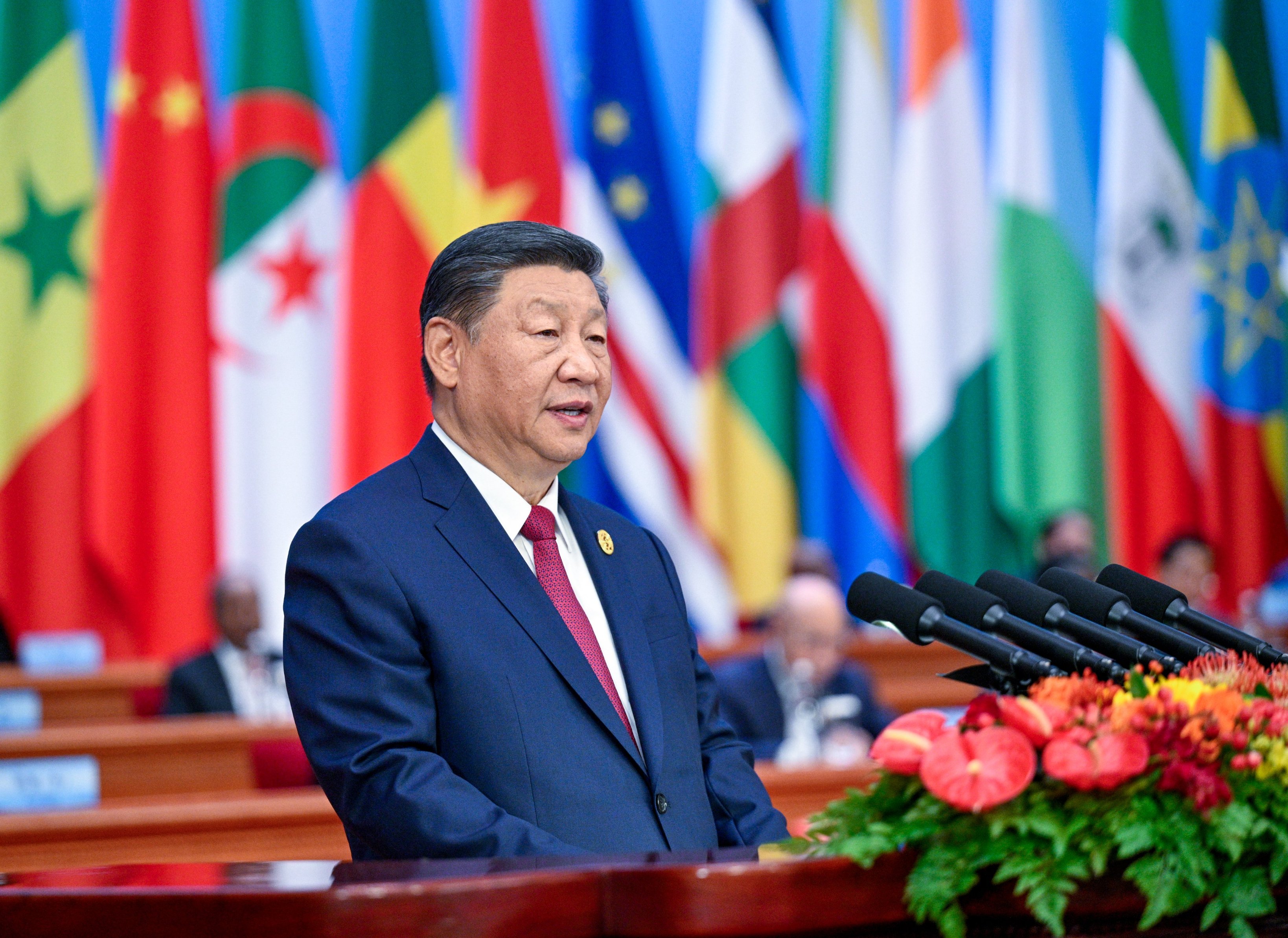
“There Is No Force On Earth That Can Stop China From Reclaiming Taiwan,” Declares Xi Jinping.
Chinese President Xi Jinping has reaffirmed China’s unyielding determination to reunify Taiwan with the mainland, delivering a forceful statement during a recent address. His bold declaration has reignited global focus on the sensitive issue of cross-strait relations, raising concerns about potential escalation in an already tense region.
The remarks come against a backdrop of heightened activity in the Taiwan Strait, where military manoeuvres and sharp diplomatic exchanges have become increasingly frequent. Xi’s comments align with his earlier statements, such as those in his 2024 New Year address, where he described reunification as a “historical inevitability” and a goal that China would pursue relentlessly. Beijing’s stance, grounded in the One-China policy, holds that Taiwan is an inalienable part of Chinese territory.


In his address, Xi emphasised China’s resolve, framing reunification as a matter of national sovereignty and pride. While Beijing has not ruled out the use of force, Xi has previously clarified that such measures would target external interference and a small group of separatists in Taiwan, rather than the island’s broader population. This approach seeks to balance assertive rhetoric with appeals to shared cultural and historical bonds across the strait.
The international response has been cautious but pointed. The United States, a key supporter of Taiwan’s defence capabilities under the Taiwan Relations Act, reiterated its commitment to ensuring the island can protect itself, while steering clear of endorsing formal independence. The United Kingdom, alongside other nations, urged restraint and called for peaceful dialogue to maintain stability. A Foreign Office spokesperson stressed the importance of avoiding actions that could heighten tensions in the region.
In Taipei, President Lai Ching-te’s administration responded by reaffirming Taiwan’s commitment to preserving the status quo and safeguarding its democratic system. The Taiwanese government has consistently championed its right to self-determination, a view widely supported by its citizens. Recent surveys show that most Taiwanese identify primarily as Taiwanese rather than Chinese, posing a challenge to Beijing’s reunification ambitions.
Analysts suggest Xi’s statement serves dual purposes: rallying nationalist sentiment domestically amid economic and global pressures, while reinforcing China’s position on the world stage. However, the provocative rhetoric carries risks, as frequent Chinese military drills near Taiwan and airspace incursions have stoked fears of unintended conflict.
With global powers navigating a web of alliances and rivalries, Taiwan remains a critical flashpoint. Xi’s remarks underscore the high stakes of the issue, which could reshape the Indo-Pacific’s security dynamics. As tensions persist, the international community continues to advocate for diplomacy and restraint to prevent a crisis with far-reaching consequences.