


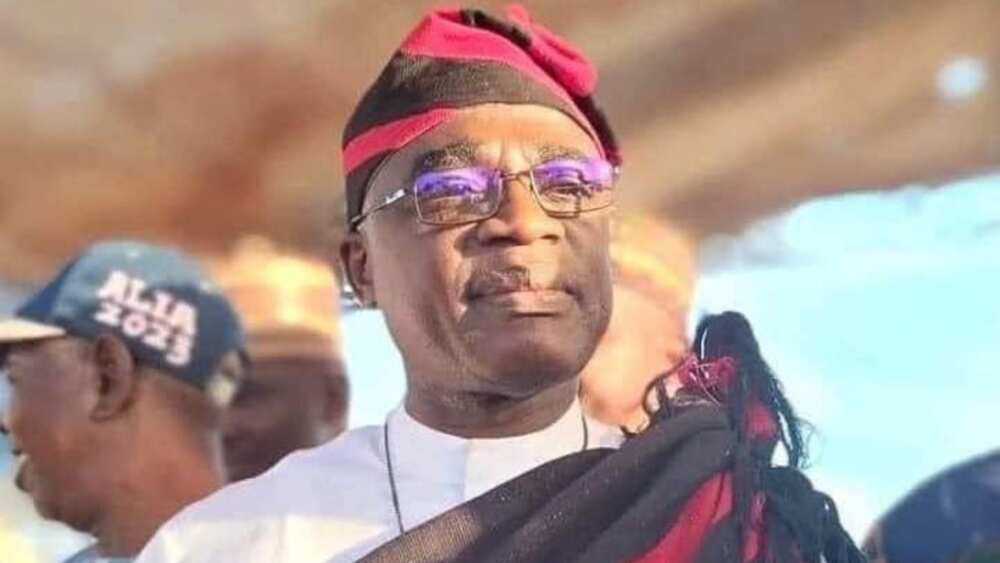
Set Up Special Intervention Fund For Benue Victims, Gov Alia Tells FG.
Governor Hyacinth Alia of Benue State has urged the Federal Government to establish a special intervention fund to support communities devastated by recent attacks, particularly the Yelewata massacre on 13-14 June 2025, which killed over 200 people.
Speaking during a town hall meeting with President Bola Tinubu in Makurdi on 18 June, Alia highlighted the need for financial assistance to rebuild homes, restore livelihoods, and support displaced farmers, who form the backbone of Nigeria’s “food basket.” The governor’s plea comes as thousands of residents have fled their homes, with over 450,000 documented as internally displaced across Benue’s 23 local government areas, exacerbating a humanitarian crisis.


Alia’s call for a special fund aligns with broader demands from stakeholders, including the Benue State Traditional Council and diaspora communities, who have described the violence as a “genocidal invasion” rather than a mere farmer-herder conflict. The governor, a Catholic priest by background, condemned the attacks as “senseless” and argued that a dedicated fund would enable rapid reconstruction of destroyed infrastructure, such as boreholes, clinics, and schools, which gunmen targeted in areas like Ukum, Logo, and Guma. He also advocated for state police, acknowledging the challenges but stressing their necessity to curb the violence, which he described as executed with “guerrilla war” tactics.
President Tinubu responded positively, promising to invest in peace initiatives and directing the Minister of Agriculture to explore ranching as a solution to land disputes. However, critics argue that previous federal interventions, such as the 2018 joint task force and the recent Forest Guards, have failed to stem the tide of violence, with over 6,896 deaths recorded in Benue since May 2023. Analysts like Kabir Adamu suggest that sustainable peace requires not only funding but also equitable land policies and tactical security deployments. The proposed fund, if implemented, could address immediate humanitarian needs, but its success hinges on transparency and accountability to avoid mismanagement.
The urgency of Alia’s request is underscored by the scale of displacement and destruction in Benue, which threatens Nigeria’s food security given the state’s agricultural significance. The international community, including Amnesty International, has called for urgent action to address the crisis, with Pope Leo XIV praying for peace during his Sunday Angelus. While Tinubu’s visit and Alia’s proposal signal a renewed focus, sceptics warn that without arrests and prosecutions, financial interventions alone may not deter perpetrators.
The call for a special fund represents a critical step, but its impact will depend on swift implementation and broader security reforms