

Scientist Warns Nigeria Faces Earthquake Risk As Tremors Challenge Aseismic Myth.
A stark warning from a Nigerian scientist has put the country on alert, challenging the long-held belief that Nigeria is immune to earthquakes. Dr Anietie Ikott, a researcher based in Uyo, Akwa Ibom State, has cautioned that Nigeria could soon face a devastating earthquake, citing recent tremors as evidence of the nation’s seismic vulnerability.


Speaking at a conference in Uyo on Saturday, Dr Ikott, Chief Executive Director of Anirich Nig. Limited, dismissed claims that Nigeria lies outside seismic zones. “We are not immune to earthquakes; they can strike any time, any day,” he declared, pointing to recent tremors felt in Abuja and parts of the South-West as proof. These events, he argued, signal that Nigeria must prepare for potentially catastrophic seismic activity.
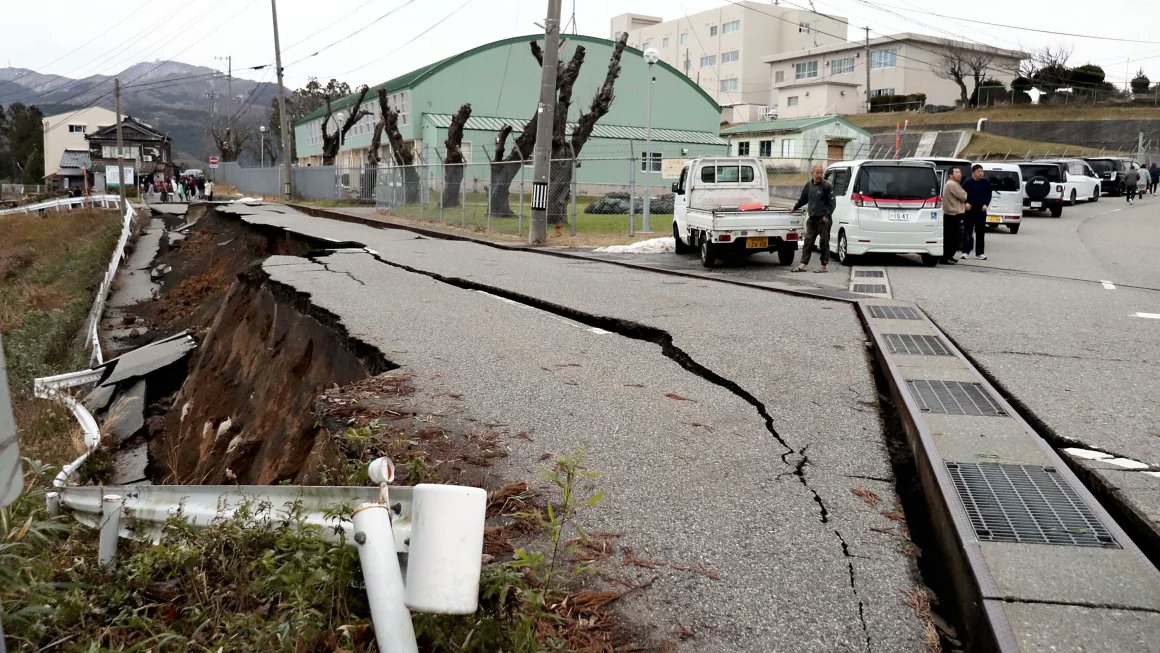

Historical records show Nigeria has experienced minor earthquakes and tremors since 1933, with notable events in 1939, 1964, 1984, 1990, 1994, 1997, 2000, and 2006. These incidents, ranging from III to VI on the Modified Mercalli Intensity Scale, were mostly concentrated in the South-West, particularly along the Ifewara-Zungeru fault. Dr Ikott’s warning aligns with earlier research by Dr Adepelumi Adekunle Abraham from Obafemi Awolowo University, who predicted a significant earthquake in Shaki, Oyo State, due to the region’s seismic activity.
The scientist also linked Nigeria’s seismic risks to broader climate change-induced disasters, such as flooding and strong winds, which have caused significant loss of life and property in states like Niger and Borno. He suggested that the stresses between the African and South American tectonic plates could be triggering tremors along Nigeria’s coastal fault lines.
In a bold claim, Dr Ikott asserted that his team has developed a “weather control technology” capable of mitigating earthquakes, excessive rainfall, and other natural disasters like tornadoes and hurricanes. While he provided no details on the technology, he urged the government to invest in such innovations to protect lives and infrastructure. “We have the tools to control these disasters,” he said, calling for urgent action to bolster Nigeria’s preparedness.
The Nigerian Geological Survey Agency (NGSA) and the Centre for Geodesy and Geodynamics (CGG) in Toro have been working to improve the country’s seismic monitoring since their establishment in 2006 and 2008, respectively. With five active seismic stations now operational, Nigeria is better equipped to detect tremors, but experts warn that more stations are needed to address data gaps.
Dr Ikott’s warning has sparked concern among Nigerians, with social media posts urging the government to take the threat seriously and “earthquake-proof” the nation. The Nigerian Association of Water-Well Drilling Rig Owners and Practitioners (AWDROP) has also raised alarms about the link between underground water extraction and induced earthquakes, advocating for stricter regulations.
As Nigeria grapples with this emerging threat, experts are calling for seismic retrofitting of buildings in high-risk areas like the South-West and increased public awareness of safety measures. With researchers forecasting a potential magnitude 7.2 earthquake by 2028, the government faces mounting pressure to act swiftly to safeguard lives and property.