

Russian Journalists Jailed For ‘Extremism’ In Secret Trial Draw Global Outcry.
Four Russian journalists have been sentenced to five and a half years in prison after a Moscow court found them guilty of extremism in a closed-door trial, sparking widespread condemnation from international human rights organisations and press freedom advocates.
The journalists — Antonina Favorskaya, Konstantin Gabov, Sergei Karelin and Artyom Kriger — were convicted on Tuesday for their alleged association with the Anti-Corruption Fund, an organisation founded in 2011 by the late opposition leader, Aleksei Navalny. The group was outlawed by the Kremlin and branded as extremist.


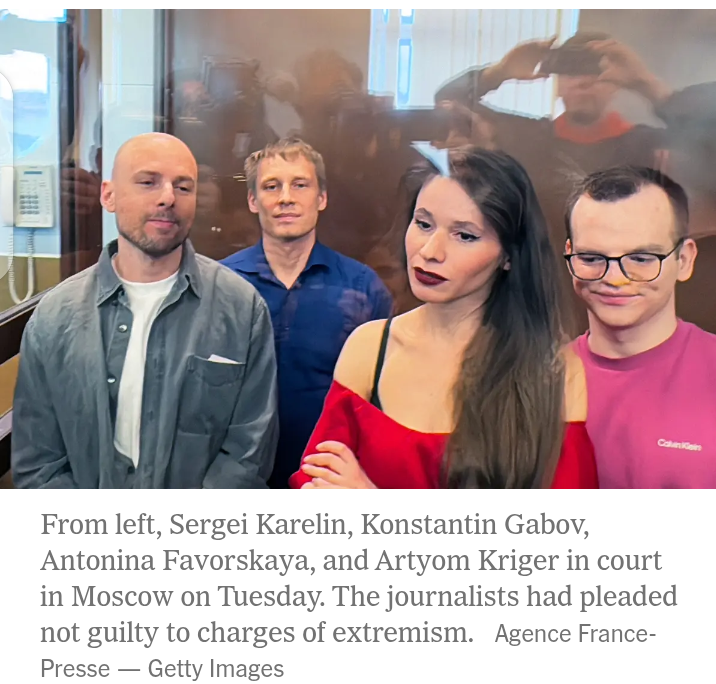

Rights groups have criticised the ruling, describing it as a grave attack on press freedom and a stark reminder of the dangers facing independent journalists operating under President Vladimir Putin’s regime. The case also underscores the broader suppression of free speech in Russia, which has intensified since the 2022 invasion of Ukraine.
All four journalists pleaded not guilty, maintaining that they were simply fulfilling their professional duties by reporting on matters of public interest. Despite this, the court found them guilty and handed down identical sentences, according to Russian state media.
The imprisoned reporters were among the few who remained in Russia to cover politically sensitive issues, including the activities and court proceedings of Mr Navalny, a prominent Kremlin critic who died in an Arctic prison colony in February 2024 under controversial circumstances.
Ms Favorskaya, who worked with a small independent media outlet, had been accused of filming content that was later used by Navalny’s allies on their platforms. Notably, she was one of the last journalists to attend Navalny’s court hearings before his death and captured the final known footage of him speaking to a judge via video link from prison. She was arrested the following month in March 2024.
Many independent journalists have fled Russia in the wake of the Ukraine war, citing increasing threats and censorship. Those who stayed — especially those who dared to report on government critics — have faced severe reprisals, including lengthy prison sentences.
Some critics of the Kremlin and its war policy have received punishments as harsh as 25 years behind bars, drawing alarm from international observers who view the crackdown as a dismantling of civil liberties and democratic values.
The sentencing of the four journalists has reignited calls for global solidarity with Russian journalists and renewed pressure on the Russian government to respect freedom of the press and release all political prisoners.