


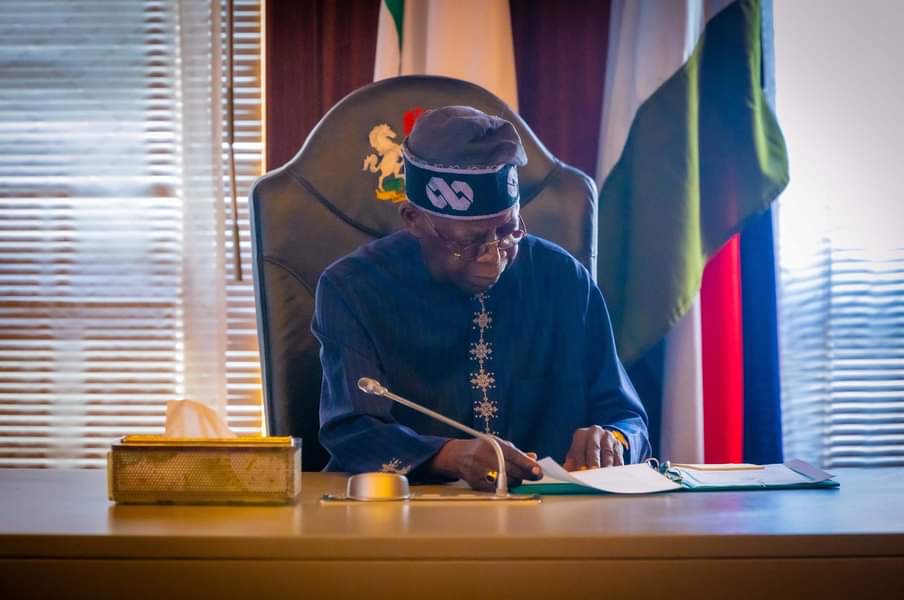
President Tinubu To Sign Transformative Tax Reform Bills Into Law.
In a move set to reshape Nigeria’s fiscal landscape, President Bola Tinubu will sign four groundbreaking tax reform bills into law on Thursday, 26 June 2025, at the Presidential Villa in Abuja. The signing ceremony, a historic moment for Nigeria’s economy, will be attended by key figures, including the Senate President, the Speaker of the House of Representatives, the Senate Majority Leader, the House Majority Leader, the Chairman of the Senate Committee on Finance, and his House counterpart. Also present will be the Chairman of the Governors Forum, the Chairman of the Progressives Governors Forum, the Minister of Finance and Coordinating Minister of the Economy, and the Attorney General of the Federation.
The four bills – the Nigeria Tax Bill, the Nigeria Tax Administration Bill, the Nigeria Revenue Service (Establishment) Bill, and the Joint Revenue Board (Establishment) Bill – were passed by the National Assembly following extensive consultations with stakeholders and interest groups. These reforms are poised to revolutionise tax administration, boost revenue generation, enhance the business environment, and attract both domestic and foreign investments.


The Nigeria Tax Bill (Ease of Doing Business) aims to consolidate Nigeria’s fragmented tax laws into a single, harmonised statute. By reducing the complexity of multiple taxes and eliminating duplications, the bill is expected to simplify compliance for taxpayers, create a more predictable fiscal environment, and significantly improve the ease of doing business in Nigeria.
The Nigeria Tax Administration Bill establishes a unified legal and operational framework for tax administration across federal, state, and local governments. This reform is designed to streamline processes and ensure consistency in tax practices nationwide.
The Nigeria Revenue Service (Establishment) Bill will repeal the existing Federal Inland Revenue Service Act, paving the way for the creation of the Nigeria Revenue Service (NRS). This new agency will operate with greater autonomy and a performance-driven approach, with an expanded mandate that includes the collection of non-tax revenue. The bill also introduces robust mechanisms to promote transparency, accountability, and efficiency.
Finally, the Joint Revenue Board (Establishment) Bill will formalise cooperation between revenue authorities at all levels of government. It establishes critical oversight mechanisms, including a Tax Appeal Tribunal and an Office of the Tax Ombudsman, to ensure fairness and accountability in tax administration.
Bayo Onanuga, Special Adviser to the President on Information and Strategy, hailed the reforms as a pivotal step towards modernising Nigeria’s fiscal framework. “These bills mark a turning point for Nigeria’s economy, fostering an environment that supports businesses, encourages investment, and drives sustainable growth,” he said.
The new laws are expected to take effect immediately, setting the stage for a more efficient and investor-friendly tax system that will propel Nigeria towards greater economic prosperity.