

Over 100,000 Nigerians Benefit From Consumer Credit Scheme, With 400,000 More Awaiting Access.
In a significant step towards bolstering financial inclusion and economic empowerment, President Bola Tinubu has announced that over 100,000 Nigerians, including 35,000 civil servants, have already benefited from the Nigerian Consumer Credit Scheme, managed by the Nigerian Consumer Credit Corporation (CREDICORP). The president revealed that an additional 400,000 Nigerians are on the waiting list to access this transformative initiative, which aims to enhance the quality of life for citizens across the nation.
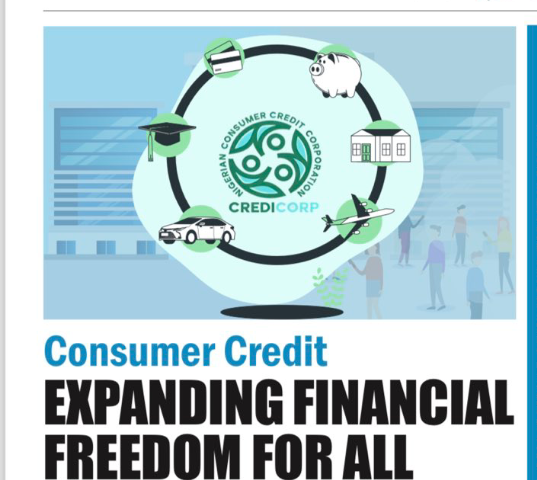

The Consumer Credit Scheme, launched in April 2024, is designed to provide affordable, interest-free loans to economically active Nigerians, enabling them to purchase essential goods and services such as vehicles, household appliances, and educational resources without the burden of upfront payments. The initiative, backed by a N100 billion fund in the 2024 appropriation, is part of President Tinubu’s broader vision to stimulate economic growth, reduce financial strain, and foster a robust credit culture in Nigeria.


Speaking during his Democracy Day address to the National Assembly on 12 June 2025, President Tinubu highlighted the scheme’s early successes, noting that it has already empowered over 100,000 Nigerians to improve their living standards. “In less than a year, over 100,000 Nigerians, including 35,000 civil servants, have accessed affordable consumer credit through CREDICORP, enabling them to purchase vehicles, light up and improve their homes, and acquire life essentials,” he stated.
The president also announced plans for a new phase of the initiative, set to launch in July 2025, which will target 400,000 young Nigerians, including members of the National Youth Service Corps (NYSC). This YouthCred programme, as outlined by CREDICORP’s Managing Director, Uzoma Nwagba, aims to provide flexible financing to empower young people and stimulate economic activity. The scheme will collaborate with banks, fintech companies, and youth-focused organisations to ensure widespread access.
CREDICORP’s innovative approach includes the establishment of a centralised credit tracking system linked to National Identification Numbers (NIN), which will unify credit information from banks, fintechs, and microfinance institutions. This system is designed to enhance accountability, reduce loan defaults, and create a reliable credit bureau to assess creditworthiness. “Every Nigerian will have an accurate and traceable credit score. No matter where the loan originates, unpaid credit will be tracked and recoverable,” Nwagba explained during a recent briefing.
The scheme has been hailed as a game-changer for Nigeria’s economy, particularly in addressing the country’s significant credit gap. With 83% of Nigerians lacking access to formal credit, the initiative seeks to bridge this divide by offering structured financing to both the banked and unbanked populations. By 2030, CREDICORP aims to provide consumer credit access to 50% of Nigeria’s working population, a target that could transform the nation’s economic landscape.
The second phase of the scheme, set to commence in May 2025, will extend access to over 70 million Nigerians, with an estimated N15.93 trillion consumer credit market annually if each beneficiary accesses an average of N500,000 in credit. This expansion is expected to boost retail sales, support local manufacturing, and address pressing needs such as housing, with 58.8% of urban dwellers currently living in slums due to limited access to affordable financing.
Stakeholders have praised the initiative for its potential to alleviate economic pressures and curb corruption by reducing the need for exploitative financial arrangements. “Nigerians shouldn’t live below their potential simply because they lack structured credit access,” a CREDICORP spokesperson noted. The scheme’s focus on interest-free instalment financing, particularly for essential expenses like school fees, rent, and medical care, is seen as a critical step towards improving livelihoods.
However, challenges remain, including the need for greater financial literacy and regulatory oversight to prevent over-indebtedness and ensure responsible lending practices. Experts have called for expanded credit bureau coverage and the integration of alternative data, such as mobile usage and utility payment histories, to improve access for the 26% of Nigerians who are unbanked.
As the Consumer Credit Scheme continues to roll out, it is poised to reshape Nigeria’s financial landscape, offering hope to millions seeking to improve their quality of life. With 400,000 more Nigerians on the queue and plans for further expansion, the initiative underscores the Tinubu administration’s commitment to fostering economic resilience and prosperity for all.
For those interested in applying, the CREDICORP portal (www.credicorp.ng) is open for expressions of interest, with the next phase of disbursements expected to commence soon.