


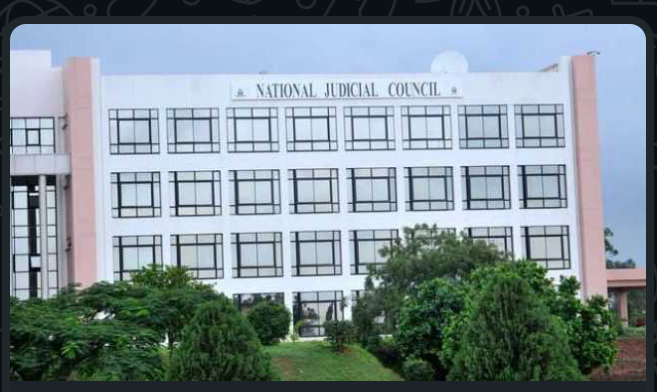
NJC Sacks 10 Imo Judges For Age Falsification In Major Judicial Shake-Up.
In a decisive move to uphold integrity within Nigeria’s judiciary, the National Judicial Council (NJC) has ordered the compulsory retirement of ten judges from the Imo State Judiciary for falsifying their dates of birth to extend their tenure unlawfully. The announcement, made on 26 June 2025, follows the NJC’s 109th meeting in Abuja, chaired by the Chief Justice of Nigeria, Justice Kudirat Kekere-Ekun.


The NJC’s investigation revealed that nine of the ten judges—five from the Imo State High Court and four from the Customary Court of Appeal—altered their official birth records to remain in service beyond the mandatory retirement age. The affected High Court judges are Justices M.E. Nwagboso, B.C. Iheka, K.A. Leaweanya, Chinyere Ngozi Okereke, and Innocent Chidi Ibeawuchi. The Customary Court of Appeal judges include Justices Tennyson Nze, Uchenna Ofoha, Everyman Eleanya, and Rosemond Ibe. The tenth judge, Justice T.N. Nzeukwu, was sanctioned for allowing himself to be sworn in as Acting Chief Judge of Imo State despite being fourth in seniority, a violation of Section 271(4) of the 1999 Constitution.
The NJC’s statement, issued by Deputy Director of Information Kemi Babalola-Ogedengbe, underscored the severity of the misconduct, describing age falsification as a “serious breach of judicial integrity.” The Council’s probe, initiated after allegations against 18 Imo State judges, cleared three judges whose records showed no discrepancies and exonerated six others whose date-of-birth issues were either minor or corrected to their disadvantage.
In addition to the retirements, the NJC recommended 21 new judicial appointments across various states, including Justice Adekanye Lekan Ogunmoye as Chief Judge of Ekiti State and Kadi Abba Mammadi as Grand Kadi of Yobe State. Mainasara Ibrahim Kogo Umar, Esq., was nominated as Chairman of the Code of Conduct Tribunal, pending President Bola Tinubu’s approval. The Council also accepted the voluntary retirements of Justice Babatunde Ademola Bakre (Ogun State High Court) and Justice H.O. Ajayi (Kwara State High Court).
The NJC further addressed other misconduct cases. Justice Isaac J. Essien of the National Industrial Court was barred from promotion for three years after issuing a confiscation order on over ₦1 billion belonging to the Nasarawa State Government, despite a pending appeal. The Council also cautioned several judges, including Justice Rahman Oshodi (Lagos) and Justice Daniel Okungbowa (Edo), for misuse of judicial discretion, and issued a final warning to Justice G.B. Okolosi (Delta) for delays in judgement delivery.
The sackings have sparked significant discussion on social media, with posts on X praising the NJC’s commitment to cleansing the judiciary. One user noted, “This is a bold step towards restoring trust in our courts,” while another called for stricter oversight to prevent future violations. The NJC’s actions are seen as part of a broader effort to enhance transparency, particularly after its April 2025 policy of publishing judicial candidates’ names for public scrutiny, which yielded 86 responses, 73 of which were favourable.
Legal experts, including Prof. Awa Kalu, SAN, have argued that indicted judges should face criminal prosecution following NJC sanctions, as age falsification may constitute a criminal offence. “The NJC handles administrative matters, but law enforcement agencies can take over for criminal acts,” Kalu stated.
The NJC reiterated its directive to Imo State Governor Hope Uzodinma to appoint the most senior judge as Acting Chief Judge, following previous controversies over appointments. The Council’s rigorous investigation and decisive action signal a renewed commitment to upholding judicial standards, aiming to restore public confidence in Nigeria’s legal system.
This development underscores the NJC’s pivotal role in regulating judicial conduct and ensuring accountability, with the judiciary under increasing scrutiny to maintain its integrity as a pillar of justice.