

Nigeria’s First Electric Vehicle Plant Challenges ₦1 Trillion Tokunbo Economy.
Nigeria’s automotive sector is witnessing a transformative milestone with the launch of the country’s first electric vehicle (EV) manufacturing plant, poised to disrupt the ₦1 trillion second-hand vehicle market. Jet Motor Company, a Nigerian automotive firm, has embarked on a bold mission to produce electric vehicles tailored for African roads, offering a sustainable alternative to the dominant “tokunbo” used car market.
The tokunbo market—comprising second-hand vehicles imported primarily from Europe and the United States—has long been a cornerstone of Nigeria’s automotive industry. In 2022, Nigeria imported used vehicles worth ₦1.3 trillion, according to the National Bureau of Statistics, underscoring the nation’s dependence on affordable but often substandard imports. Economic challenges, including a weakened naira and soaring inflation, have driven up prices, with a 2005 Toyota Corolla now retailing for over ₦6.5 million, compared to ₦1.9 million in 2015.


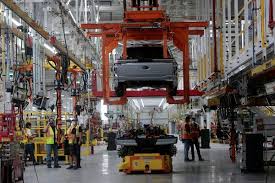

Jet Motor Company’s new EV plant seeks to break this cycle by producing locally manufactured electric vehicles, reducing reliance on imports and bolstering economic self-sufficiency. Founded in 2017, the company has already made significant strides with its JET EV and JET MOVER models, designed to withstand Nigeria’s rugged road conditions. In 2021, Jet Motor partnered with GIG Logistics to launch Nigeria’s first electric cargo vans, equipped with a 107.8 kWh lithium-ion battery and a 300 km range per charge. The Nigerian government has also embraced these vehicles, purchasing several units, a move that signals strong support for local EV production.
This development comes at a pivotal moment. Nigeria’s automotive industry has been strained by volatile exchange rates and high import tariffs, pushing both new and used car prices out of reach for many. In 2013, the government increased import duties on vehicles to 70%, leading importers to bring in accident-damaged cars to benefit from a 30% tariff rebate. As a result, up to 80% of vehicles in Nigeria are classified as accident vehicles, according to industry experts.
Jet Motor’s EV plant offers a promising solution. By tapping into Nigeria’s abundant lithium ore reserves, the company plans to produce cost-effective battery packs, potentially positioning Nigeria as a hub for EV battery manufacturing in Africa. “The high cost of EVs in Nigeria is largely due to battery packs,” said Chukwuebuka Uchendu, CEO of Jet Motor Company. “With local lithium resources, we can lower costs and make electric vehicles more affordable for Nigerians.”
The plant is also expected to stimulate job creation and strengthen local manufacturing. Unlike the tokunbo market, which depletes foreign exchange reserves, local EV production supports Nigeria’s economy by sourcing up to 60% of components domestically, as demonstrated by other Nigerian EV startups like Siltech. This aligns with government efforts to promote industrialisation, as seen in the Senate’s praise for Dangote Sinotruk West Africa’s vehicle assembly initiatives.
Challenges persist, however. Nigeria’s nascent EV market faces hurdles such as limited charging infrastructure and a shortage of skilled technicians. Tope Ojo, CEO of Autogig International Resources Limited, highlighted the need for reliable electricity and technical expertise to drive EV adoption. Nevertheless, the global shift towards sustainable transport is gaining momentum in Nigeria, with the National Automotive Design and Development Council forecasting that 30% of passenger cars will be electric by 2025.

Jet Motor’s plant could be a game-changer, challenging the tokunbo economy while promoting cleaner, locally produced vehicles. As Nigeria grapples with rising fuel costs following the removal of petrol subsidies, electric vehicles offer a cost-effective and eco-friendly alternative for consumers.
With Jet Motor leading the way, Nigeria is taking its first steps towards joining the global EV revolution, potentially transforming its automotive industry and reducing dependence on imported used cars. The path ahead may be fraught with challenges, but the drive towards a sustainable, self-reliant automotive future has begun.