


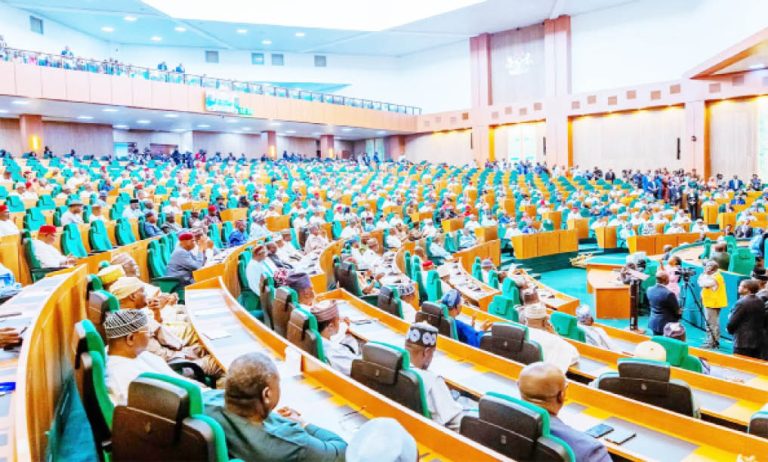
Nigerian House Of Representatives Proposes Historic Constitutional Amendment To Boost Inclusion.
The House of Representatives in Nigeria has unveiled a groundbreaking proposal to amend the 1999 Constitution, aiming to reserve 10 per cent of National Assembly seats for women and 5 per cent for Persons with Disabilities (PWDs). Announced on 8 July 2025 by Speaker Tajudeen Abbas during the second Legislative Open Week in Abuja, this move seeks to address the long-standing underrepresentation of these groups in the country’s legislative framework, marking a significant step towards inclusive governance.


The proposed amendment would increase the National Assembly’s total seats from 469 to 552, creating 83 additional seats—55 in the House of Representatives and 28 in the Senate. These seats, exclusively for women and PWDs, would be filled through direct elections on separate ballots, ensuring regional balance across Nigeria’s 36 states and the Federal Capital Territory. Candidates for the PWD seats would be nominated by accredited disability advocacy organisations, with elected representatives enjoying equal rights, privileges, and committee responsibilities as their peers.
Speaker Abbas highlighted Nigeria’s historically low female representation, noting that women occupied less than one per cent of parliamentary seats at independence in 1960, rising only to 4.2 per cent in the current 10th National Assembly. The representation of PWDs remains similarly negligible. Citing international examples, Abbas pointed to Rwanda and Senegal, where constitutional quotas boosted female representation from under 5 per cent to over 30 per cent in a single electoral cycle. He described the amendment as a means to “break the cycle of stagnation” and enrich legislative debates with diverse perspectives.
The proposal has sparked optimism among civil society groups and advocates for gender equality and disability rights. However, it faces challenges, as a similar bill in the 9th National Assembly, which proposed 111 seats for women, failed to pass in 2022 due to concerns about a bloated legislature and arguments that merit, not gender, should determine candidacy. The current bill addresses these concerns by reducing the number of additional seats to 83 and including a clause for review after 16 years, potentially allowing for its termination if deemed unnecessary.
Opposition voices, including some lawmakers, argue that the amendment could be seen as discriminatory and that women should compete on equal terms. However, proponents counter that systemic barriers—cultural, economic, and institutional—necessitate affirmative action to level the playing field. The bill, now under review by the Committee on Constitution Review, requires approval from both the Senate and two-thirds of Nigeria’s 36 state assemblies to become law.
As Nigeria grapples with its low ranking in female parliamentary representation—among the lowest in Africa alongside countries like Niger and Eritrea—this amendment represents a bold effort to foster inclusivity. With 109 amendment bills under consideration, including electoral and judicial reforms, the National Assembly’s push for change signals a commitment to a more representative democracy. Stakeholders are hopeful that collaboration with state assemblies and advocacy groups will ensure the bill’s passage, paving the way for a more equitable legislative landscape.