

Nigerian House Of Representatives Proposes Bill To Restrict Public Officials From Private Schools And Hospitals.
The Nigerian House of Representatives has introduced a groundbreaking bill aimed at prohibiting public officials and civil servants, along with their immediate families, from using private schools and healthcare facilities. Titled “A Bill for an Act to Prohibit Public and Civil Servants from Patronising Private Schools and Health Care Services and for Related Matters (HB 2487),” the legislation passed its first reading on Tuesday, 22 July 2025, sparking widespread debate across the nation.


Sponsored by Hon. Amobi Godwin Ogah, the representative for Isuikwuato/Umunneochi Federal Constituency in Abia State, the bill seeks to compel government officials to rely solely on public education and healthcare systems. Speaking at a press briefing at the National Assembly, Ogah described the proposal as a pivotal step towards restoring public trust in Nigeria’s struggling public institutions. He argued that the preference of public officials for private and foreign services has contributed significantly to the deterioration of government-run schools and hospitals.
Ogah highlighted the stark contrast between Nigeria’s founding leaders and current trends, noting that figures such as Sir Ahmadu Bello, Dr. Nnamdi Azikiwe, Chief Obafemi Awolowo, and Alhaji Tafawa Balewa were educated in public or mission schools. “The penchant for private institutions was alien to our democrats of old,” he said. “Today, it has become an unwholesome trend for public servants to seek private education and medical care, to the detriment of our economy and public institutions.”
The lawmaker cited alarming statistics to underscore the urgency of the bill. He revealed that Nigerians spent over $29.29 billion on foreign medical treatment during the administration of former President Muhammadu Buhari, while $218.87 million was spent on foreign education in 2023 alone. In comparison, Nigeria allocated N1.336 trillion to healthcare in its 2024 budget, a figure dwarfed by the estimated N1.6 trillion spent annually on medical tourism. “This bill aims to end medical and educational tourism among public servants, ensuring accountability and investment in our public institutions,” Ogah stated.
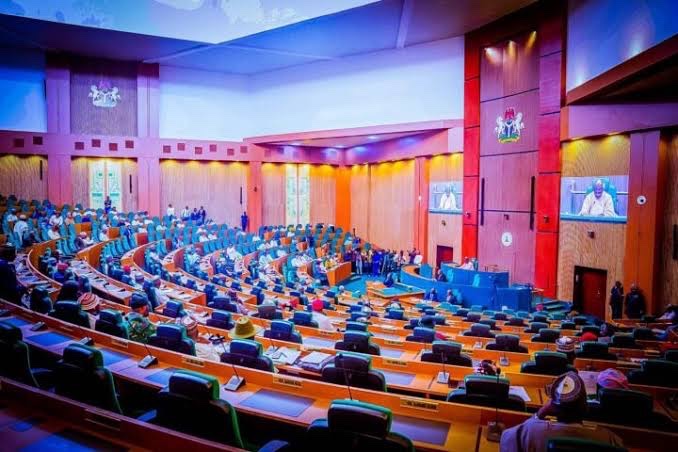

The proposed legislation is designed to eliminate conflicts of interest, enhance public trust, and uphold the integrity of government-funded schools and hospitals. By mandating that public officials and their families use the same services as ordinary citizens, the bill seeks to drive improvements in infrastructure and service delivery. Ogah called for widespread support, urging Nigerians and the media to embrace a new culture of national consciousness to promote and revitalise public institutions.
However, the bill is not without precedent or controversy. Similar proposals in previous assemblies, such as a 2019 motion to restrict public officials from seeking medical treatment abroad, were rejected. Critics argue that enforcing such a ban could face practical challenges, including the capacity of public institutions to meet demand. Supporters, however, see it as a bold move to address systemic neglect and restore national pride in Nigeria’s public services.
As the bill progresses to its second reading, it is expected to undergo further deliberation and public hearings to refine its provisions. If passed, the legislation could mark a significant shift in how public servants engage with Nigeria’s education and healthcare systems, potentially driving accountability and investment in these critical sectors.