


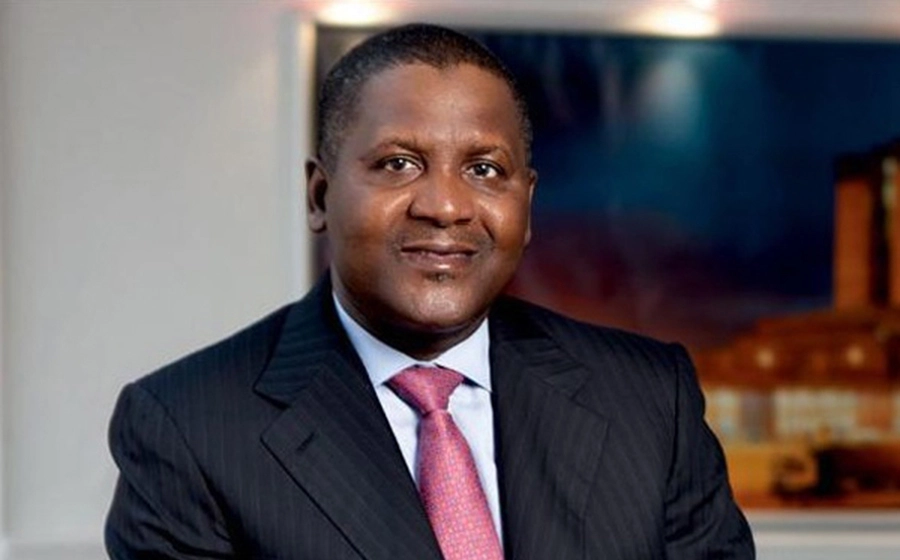
Nigerian Billionaire Aliko Dangote Named In TIME100 World’s Most Influential Philanthropists List For 2025.
Nigerian billionaire and business magnate Aliko Dangote has been named among the world’s most influential philanthropists in TIME Magazine’s inaugural TIME100 Philanthropy List for 2025, released on Tuesday. As the only Nigerian honouree, Dangote joins global icons such as Michael Bloomberg, Oprah Winfrey, Warren Buffett, and Melinda French Gates in the prestigious “Titans” category, recognised for his transformative contributions to social impact across Africa.
Dangote, Africa’s richest man with a net worth of £18.8 billion (approximately $23.9 billion), built his fortune through the Dangote Group, a conglomerate spanning cement, agriculture, and oil refining. However, it is his unwavering commitment to philanthropy through the Aliko Dangote Foundation (ADF), established in 1994 and endowed with £985 million ($1.25 billion) in 2014, that has earned him this global accolade. The foundation, the largest private charitable organisation in sub-Saharan Africa, allocates over £27.6 million (N50 billion) annually to programmes addressing health, education, economic empowerment, disaster relief, and nutrition across the continent.

“My mother instilled in me the ethos of giving back, which inspired my philanthropy 30 years ago,” Dangote said in a statement. “I want to be known not just as Africa’s richest person but also as its biggest philanthropist.” His vision is reflected in the ADF’s impactful initiatives, including a £78.9 million ($100 million) multi-year programme to combat severe childhood malnutrition and a historic vaccine partnership with the Bill & Melinda Gates Foundation, which contributed to the World Health Organization’s 2020 declaration that polio was eradicated in Africa, with Nigeria being the final country to achieve this milestone.
Education remains a cornerstone of Dangote’s philanthropy. In 2019, the ADF made headlines with a £946,000 (N1.2 billion) hostel donation to Ahmadu Bello University in Zaria, the largest private donation to a Nigerian university at the time. More recently, Dangote pledged £7.89 million ($10 million) to the Aliko Dangote University of Science and Technology in Kano State. The foundation’s Mu Shuka Iri (Let’s Plant a Seed) programme trains local women, affectionately called “Aunties,” in Montessori teaching methods to deliver early childhood education in underserved communities in Kano. Additionally, the ADF supports vocational training, scholarships, and fellowships through the World Economic Forum’s Young Global Leaders programme, underscoring Dangote’s commitment to nurturing Africa’s next generation of leaders.
“We need to create the next generation of African leaders,” Dangote emphasised, expressing hope that his three daughters will carry forward the family’s dual legacy of business success and social impact.
Dangote’s inclusion in the TIME100 Philanthropy List, which honours 100 individuals from 28 countries across four categories—Titans, Leaders, Trailblazers, and Innovators—highlights his role in redefining philanthropy in Africa. His efforts have not only addressed immediate needs but also laid the foundation for sustainable development, earning praise for leveraging his wealth to drive transformative change.
As Nigeria faces ongoing economic and social challenges, Dangote’s recognition serves as a beacon of hope, demonstrating the power of homegrown solutions to foster inclusive growth. Social media platform X has been abuzz with congratulatory messages, with users hailing him as “Africa’s Titan” and a symbol of the continent’s potential. “This is a proud moment for Nigeria and Africa,” one post read, encapsulating the widespread sentiment of celebration.
Dangote’s journey from a commodities trader to a global philanthropist underscores his belief in reinvesting in the continent that shaped his success. As he continues to champion health, education, and economic empowerment, his inclusion in the TIME100 list cements his legacy as a trailblazer committed to uplifting millions across Africa.
