


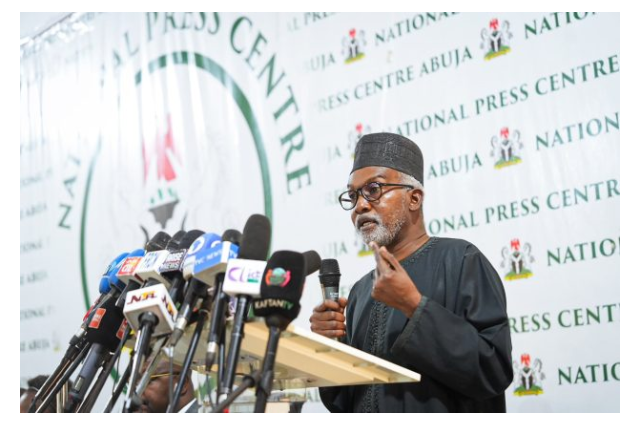
Nigeria Stands Firm Against US Pressure To Accept Venezuelan Deportees, Says Foreign Minister.
Nigeria has firmly rejected pressure from the Donald Trump administration to accept Venezuelan deportees, including prisoners, from the United States, according to Foreign Affairs Minister Yusuf Tuggar. The announcement, made during an interview on Channels Television’s Politics Today on 10 July 2025, underscores Nigeria’s resolve to prioritise its domestic challenges over external demands.
Tuggar revealed that the US has been urging several African nations, including Nigeria, to take in Venezuelan nationals, some of whom are former inmates. “The US is mounting considerable pressure on African countries to accept Venezuelans to be deported from the US, some straight out of prisons,” he stated. “It will be difficult for Nigeria to accept Venezuelan prisoners. We have enough problems of our own.” With a population exceeding 230 million and ongoing economic and security challenges, Tuggar emphasised that Nigeria cannot serve as a “dumping ground” for deportees.


The minister’s comments come in the context of heightened diplomatic tensions following President Bola Tinubu’s attendance at the BRICS Summit in Rio de Janeiro from 6 to 7 July 2025. During the summit, Trump announced a 10% trade tariff on goods from BRICS nations, including Nigeria, prompting speculation about retaliatory measures. However, Tuggar clarified that the tariff threat might not be directly linked to Nigeria’s BRICS participation but rather to the broader issue of deportation demands. “The issue of tariffs may not necessarily have to do with us participating in the BRICS meeting,” he noted.
Tuggar also addressed the US’s claim that its revised visa policy for Nigerians, which imposes stricter requirements for non-immigrant visas, is based on reciprocity. He dismissed this as misleading, highlighting that Nigeria offers five-year multiple-entry visas to US citizens and is upgrading to electronic visa processing for efficiency. “We’re engaging the Americans and reminding them that we offer five-year multiple entry visas to their citizens,” he said.
The refusal to accept Venezuelan deportees reflects Nigeria’s broader foreign policy under President Tinubu’s “4D Doctrine,” which prioritises demography, development, diaspora, and democracy. Tuggar’s stance has sparked varied reactions, with some Nigerians on social media praising the government’s resolve, while others expressed frustration over the broader implications of US-Nigeria relations under Trump’s administration.
As Nigeria navigates these diplomatic challenges, Tuggar reiterated the country’s commitment to welcoming back its own citizens facing deportation from the US, provided they are treated with dignity. “We insist that they be returned with dignity, not in handcuffs or subjected to maltreatment,” he said, referencing the estimated 3,690 Nigerians at risk of deportation, according to US Immigration and Customs Enforcement data. This principled stand underscores Nigeria’s determination to protect its national interests while maintaining a constructive dialogue with global partners.