


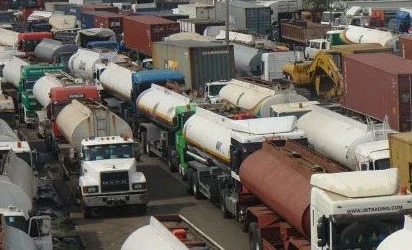
Nigeria Bans 60,000-Litre Fuel Tankers From March 1 To Enhance Road Safety.
The Nigerian Midstream and Downstream Petroleum Regulatory Authority (NMDPRA) has announced a ban on 60,000-litre fuel tankers from operating on Nigerian roads, effective from 1st March 2025. The decision aims to reduce road accidents involving heavy-duty petroleum tankers and enhance safety in fuel transportation.
The NMDPRA Executive Director, Distribution Systems, Storage, and Retailing Infrastructure, Ogbugo Ukoha, made the announcement on Wednesday in Abuja, following discussions with key stakeholders.


A Unified Decision for Safer Roads
Ukoha revealed that a technical committee, comprising representatives from agencies such as the Department of State Services (DSS), Federal Fire Service, Federal Road Safety Corps (FRSC), and various petroleum industry associations, reached a consensus on the ban.
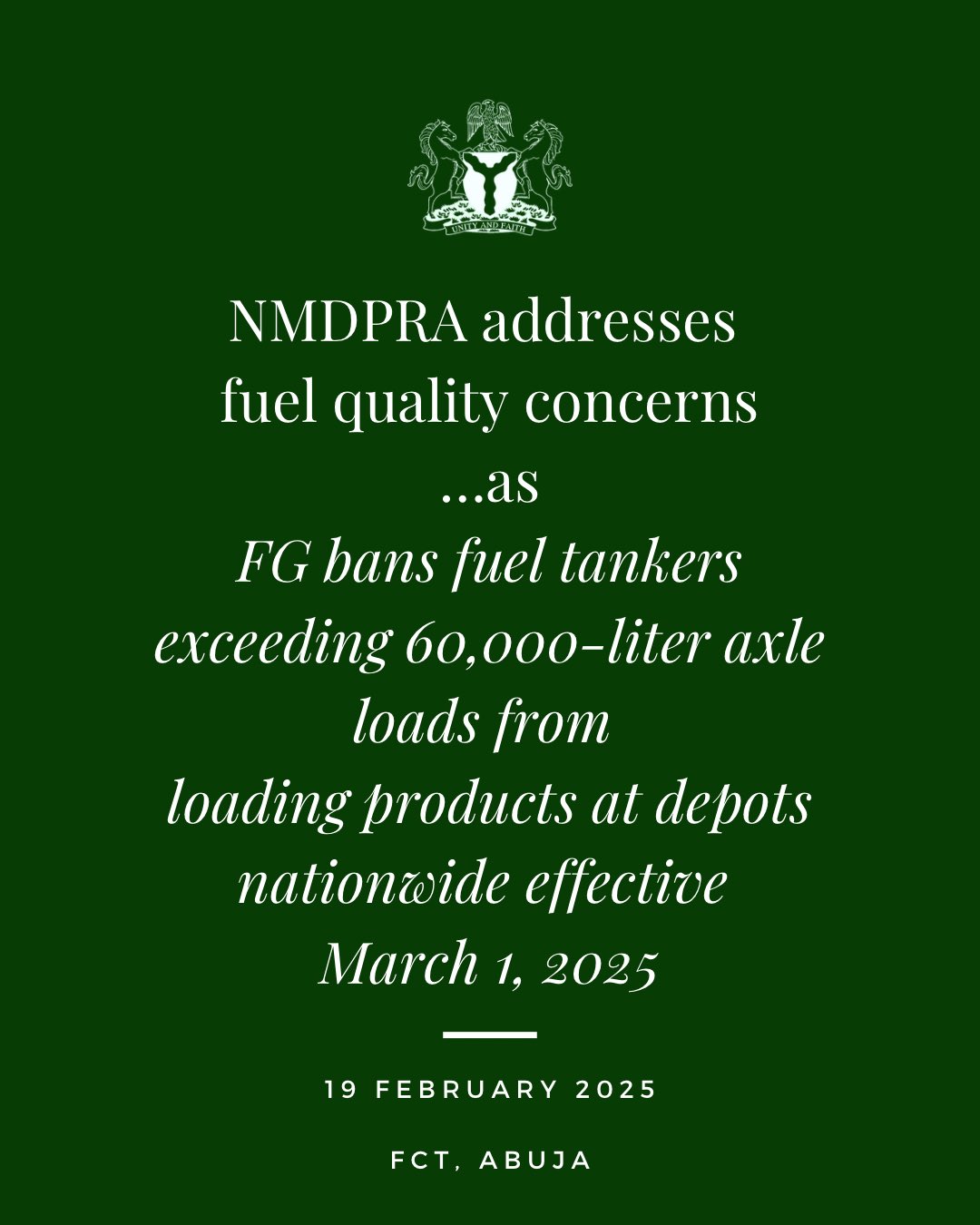

“From 1st March 2025, any truck carrying more than 60,000 litres of hydrocarbon will not be allowed to load at any depot,” he stated.
He emphasised that this was the first time all stakeholders had collectively agreed on a major policy change regarding fuel transportation, reflecting a shared commitment to road safety.
Dismissal of Fuel Quality Concerns
Ukoha also addressed concerns regarding the quality of fuel in circulation, dismissing recent claims as “bogus, misleading, and unscientific.” He assured Nigerians that all petroleum products, whether imported or locally refined, undergo strict quality checks before being distributed.
“The regulator ensures that every batch of fuel is tested at both the loading and discharge points. Accredited laboratories certify compliance with industry specifications before products are released into the market,” he explained.
He further criticised misinformation spreading on social media, urging Nigerians to rely on verified regulatory processes rather than speculative claims.
Maintaining Industry Standards
Ukoha reiterated NMDPRA’s commitment to enforcing the Petroleum Industry Act (PIA) 2021 and the Standards Organisation of Nigeria (SON) specifications. He outlined key parameters used in fuel quality assessments, including sulphur content, Research Octane Number (RON), density, and oxygenate levels.
He also highlighted the significance of colour coding in fuel regulation, explaining that it prevents misidentification, which could lead to engine damage.
“Imagine putting the wrong product into the wrong vehicle. Colour differentiation helps prevent such errors,” he said.
Fuel Supply and Domestic Refining
On the issue of fuel supply, Ukoha disclosed that Nigeria’s daily consumption of Premium Motor Spirit (PMS) had reduced from an average of 66 million litres before subsidy removal in May 2023 to around 50 million litres. However, local refineries currently contribute less than 50% of this demand, necessitating imports to bridge the shortfall.
“No oil marketing company that owns a refinery in Nigeria has imported PMS this year,” he noted, adding that private oil marketing companies had stepped in to ensure availability.
He assured Nigerians that the regulator remained committed to ensuring a steady supply of petroleum products, preventing shortages, and maintaining pricing transparency.
With the upcoming ban on high-capacity tankers and continued regulatory oversight, the government aims to enhance both road safety and fuel quality management across the country.