


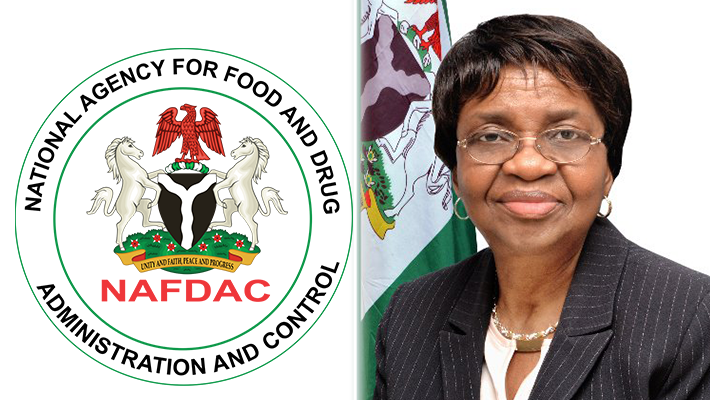
NAFDAC Secures N2.5 Billion From Crackdown On Illicit Drug Markets.
The National Agency for Food and Drug Administration and Control (NAFDAC) has successfully generated N2.5 billion through fines imposed during a recent enforcement operation targeting illicit drug markets in Lagos, Onitsha, and Aba. The agency’s Director-General, Professor Mojisola Adeyeye, disclosed this achievement during a session with the House of Representatives Committee on Food and Drug Administration and Control in Abuja, highlighting the significant strides made in safeguarding public health.


The operation, which focused on major open drug markets in Idumota (Lagos), Onitsha (Anambra), and Aba (Abia), uncovered widespread violations, including the sale of counterfeit, expired, and unregistered medicines. Some traders were found distributing banned substances, such as Tramadol, posing severe risks to public safety. Over 1,300 security personnel were deployed during the four-week campaign, which resulted in fines totalling approximately N2.537 billion, all deposited directly into NAFDAC’s official account.
Professor Adeyeye clarified that the fines, ranging from N500,000 to N2 million for breaching Good Distribution and Storage Practice (GDSP), were not intended to be punitive but to enforce compliance and protect consumers. However, the agency faced financial challenges, with N996 million spent on enforcement operations, N159 million borrowed from a donor grant, and N1.175 billion allocated to regulatory expenses, leaving N207 million after deductions. Adeyeye also noted that the Office of the Accountant-General of the Federation’s classification of NAFDAC as a revenue-generating agency has led to up to 50 per cent of its inflows being redirected to the federal treasury, hampering operational capacity.
The enforcement approach differed across regions. In Lagos, Onitsha, and Aba, NAFDAC conducted thorough inspections and imposed fines based on violations, as these markets lack Coordinated Wholesale Centres (CWCs). In contrast, a court-mandated operation in Kano, prompted by a February 2024 Federal High Court ruling, focused on relocating traders to the Kanawa Pharmaceutical Centre without generating revenue due to security risks and legal constraints. Adeyeye addressed concerns from lawmakers about perceived leniency in Kano, explaining that volatile conditions, including threats to personnel, necessitated a different approach.
The House Committee, chaired by Hon. Regina Akume, described NAFDAC’s financial report as incomplete and requested a detailed, location-by-location breakdown of the N2.5 billion. Despite these administrative challenges, the raids mark a significant victory in Nigeria’s fight against substandard and counterfeit drugs, reinforcing NAFDAC’s commitment to public health. The agency’s efforts have been praised for addressing critical threats, with Adeyeye emphasising the need for sustained funding to continue such operations.
This crackdown not only demonstrates NAFDAC’s resolve to regulate the pharmaceutical sector but also underscores the importance of tackling illicit drug markets to ensure safe and effective medicines for Nigerians. With ongoing efforts to strengthen enforcement and compliance, the agency is paving the way for a healthier and safer future.