


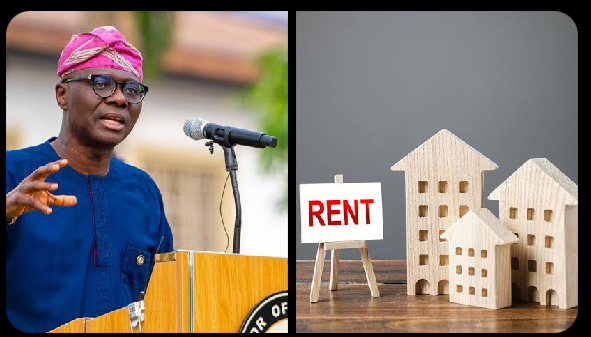
Lagos State Unveils Monthly Rent Payment Scheme To Support Low-Income Residents.
The Lagos State Government has announced plans to introduce a flexible rent payment system, allowing tenants to pay monthly or quarterly. The initiative, aimed particularly at low-income earners, is set to transform the state’s housing landscape by easing the burden of hefty annual rent payments, a long-standing challenge for many Lagosians.
The announcement was made by the Commissioner for Housing, Moruf Akinderu-Fatai, during the 2025 Ministerial Press Briefing on Tuesday, marking the second year of Governor Babajide Sanwo-Olu’s second term. Speaking to journalists, Akinderu-Fatai outlined the government’s commitment to making housing more accessible and affordable, building on the success of its existing rent-to-own scheme, which allows beneficiaries to pay a five percent initial deposit and spread the balance over 10 years. “That initiative was well-received, and its success encouraged us to explore new ways to reduce the pressure of yearly rent payments,” he said.


The proposed system addresses the financial strain faced by many residents, particularly low-income earners, who struggle to muster lump sums for annual rent. “We believe that monthly or quarterly payment options will give people more breathing space and reduce the stress associated with sourcing large amounts,” Akinderu-Fatai explained. The commissioner revealed that the government is actively engaging with landlords, developers, and other stakeholders to iron out challenges related to enforcement, payment tracking, and landlord cooperation. A pilot phase is planned for selected areas across the state to test the initiative’s feasibility. “This is not just policy on paper. We are making real progress,” he assured.
The initiative has been met with optimism, with public support on the high for the move.
This policy builds on earlier efforts by the Sanwo-Olu administration to reform the housing sector. In 2021, the governor advocated for a monthly rental system to address the affordability gap, a position echoed by former Minister of Works and Housing, Babatunde Fashola, who argued that yearly rent payments exacerbate inequality. The state’s rent-to-own programme, launched in 2016, has already enabled thousands of residents to become homeowners with minimal upfront costs, and the new rental scheme aims to extend similar relief to tenants not seeking ownership.
As Lagos, with its estimated 20 million residents and a housing deficit of three million units, grapples with urban challenges, this initiative signals a bold step towards inclusive housing policies. The government’s focus on stakeholder collaboration and a phased implementation underscores its determination to make the scheme a success. “We know what this means for many families, and we are determined to make it happen,” Akinderu-Fatai concluded.
With the pilot phase on the horizon, Lagosians await further details on how the scheme will reshape the rental market, offering hope to countless families striving for financial stability in one of Africa’s most vibrant cities.