


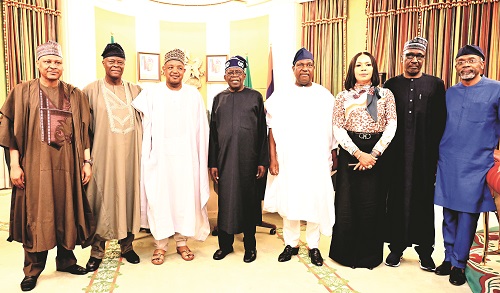
Federal Government Bans MDAs From Procuring Foreign Goods And Services Nigeria Can Produce.
In a landmark move to bolster local industry and promote self-reliance, the Federal Government of Nigeria has announced a comprehensive ban on Ministries, Departments, and Agencies (MDAs) procuring foreign goods and services that can be produced domestically. The directive, effective immediately, aims to strengthen Nigeria’s economy, create jobs, and reduce dependency on imports.
The announcement, made earlier today by the Minister of Trade and Investment, Dr. Aisha Mohammed, underscores the government’s commitment to fostering indigenous manufacturing and service sectors. “This is a bold step towards economic sovereignty,” Dr. Mohammed stated during a press briefing in Abuja. “Nigeria has the capacity to produce a wide range of goods and services. By prioritising our local industries, we are not only saving foreign exchange but also empowering our entrepreneurs and workforce.”


The policy mandates that all MDAs must source goods and services from Nigerian producers unless it can be proven that no local alternative exists. A special oversight committee, to be established under the Ministry of Trade and Investment, will monitor compliance and ensure transparency in the procurement process. The committee will also maintain a database of locally produced goods and services to guide MDAs in their purchasing decisions.
Economic analysts have hailed the decision as a game-changer for Nigeria’s industrial landscape. “This policy could significantly boost sectors like agriculture, manufacturing, and technology,” said Dr. Chidi Okonkwo, “It’s a clear signal to investors that the government is serious about promoting ‘Made in Nigeria’ products” He concluded.
Some experts have cautioned that the policy’s success will depend on effective implementation. “The government must ensure that local producers meet quality standards and that the oversight committee operates without bias,” noted Professor Aminu Bello, a public policy expert. “There’s also the challenge of addressing potential price disparities between local and imported goods.”
To address these concerns, the government has pledged to provide support to local industries through tax incentives, access to credit, and capacity-building programmes. The Ministry of Trade and Investment is also expected to collaborate with the Standards Organisation of Nigeria (SON) to ensure that locally produced goods meet international benchmarks.
The ban aligns with President Bola Tinubu’s broader economic agenda, which prioritises industrialisation and economic diversification. It follows recent initiatives to improve infrastructure and ease of doing business in Nigeria, further positioning the country as a hub for local production.
As Nigeria takes this significant step towards economic self-sufficiency, all eyes will be on the government’s ability to translate this policy into tangible gains for businesses and citizens alike. For now, the message is clear: Nigeria is ready to champion its own products and services on the global stage.