


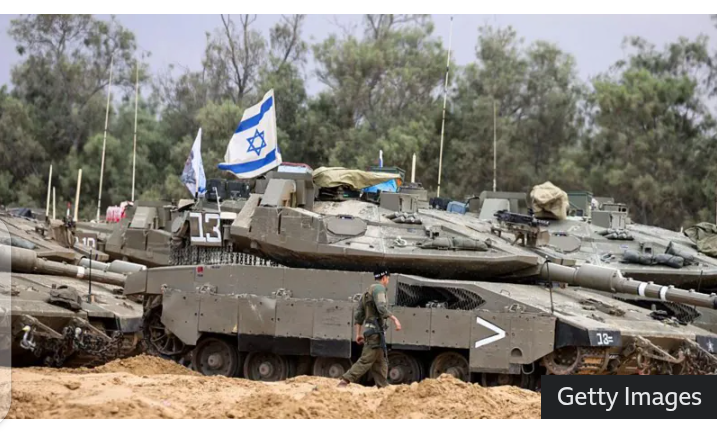
Israeli Military Mobilises Reservists For Expanded Gaza Offensive.
The Israeli military has announced plans to call up tens of thousands of reservists to “intensify and expand” its operations in Gaza, escalating efforts to secure the release of hostages and defeat Hamas militants. The Israel Defense Forces (IDF) stated that the operation aims to “increase the pressure” on Hamas by targeting new areas and destroying infrastructure both above and below ground.
The move, approved by Israel’s security cabinet, follows the collapse of a two-month ceasefire with Hamas on 18 March. Since then, no hostages have been released, and international negotiations have failed to secure a new deal for the remaining 59 captives held by Hamas, 24 of whom are believed to be alive. The IDF’s renewed offensive has seen Israel seize large swathes of Gaza, displacing hundreds of thousands of Palestinians and imposing a blockade on humanitarian aid, which has been in place for over two months.


Aid agencies have warned of acute shortages of food, water, and medicine, describing the blockade as a “policy of starvation” that could constitute a war crime. Israel has rejected these allegations, insisting its strategy is designed to pressure Hamas into releasing hostages.
The expanded offensive, reportedly delayed until after US President Donald Trump’s visit to the region next week, has sparked concerns among critics and hostage families. Many question Prime Minister Benjamin Netanyahu’s objectives, accusing him of prolonging the conflict for political gain and undermining negotiations. Netanyahu has denied these claims, but nearly 19 months into the war, he has yet to present a clear plan for Gaza’s future.
The decision places additional strain on reservists, some of whom have been called up five or six times since the conflict began. Families of hostages have urged the government to prioritise a deal with Hamas, arguing it is the only way to save those still alive. “Our loved ones are running out of time,” said a spokesperson for the families, speaking anonymously.
As the conflict deepens, the international community continues to grapple with the humanitarian crisis in Gaza, where displacement and deprivation have reached critical levels. The path to a resolution remains uncertain, with both sides entrenched and diplomatic efforts faltering.