


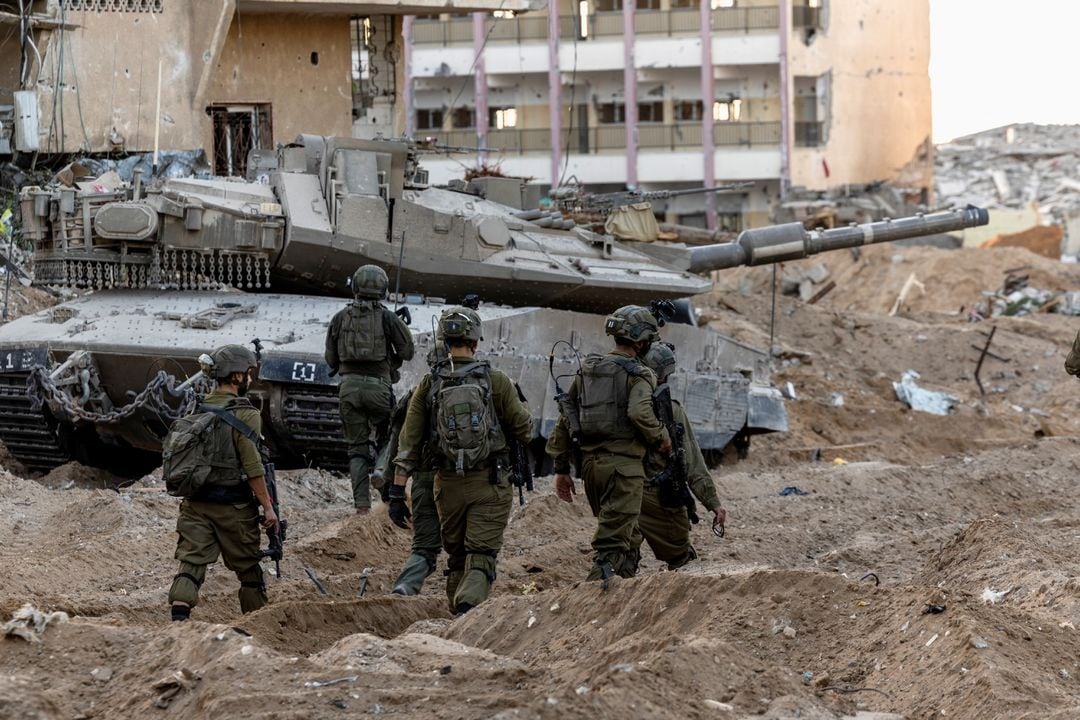
Israel Orders Full Military Occupation Of Gaza.
The Israeli government has directed its military to launch a full-scale occupation of the Gaza Strip, deploying maximum force in a significant escalation of the ongoing conflict. The announcement, made late Monday, marks a dramatic shift in Israel’s military strategy, moving from targeted operations to a comprehensive ground offensive aimed at seizing and holding the entire territory.
According to Israeli officials, the decision follows stalled negotiations with Hamas over the release of hostages taken during the 7 October 2023 attack, which killed 1,200 people and saw 250 others abducted. Prime Minister Benjamin Netanyahu, addressing the nation, stated that the operation seeks to “eliminate Hamas’s control and ensure the security of Israeli citizens.” He described the move as a response to Hamas’s refusal to release hostages and ongoing rocket attacks from Gaza.


The operation, which began early Tuesday, involves tens of thousands of Israeli reservists mobilised to secure key areas across Gaza. Reports indicate that Israeli forces are focusing on dismantling Hamas’s infrastructure, including tunnels and command centres, while establishing permanent military outposts. The Gaza Health Ministry reported heavy casualties, with over 600 Palestinians killed in airstrikes since the offensive intensified last week.
International reactions have been swift and varied. The United Nations has warned of a deepening humanitarian crisis, with Gaza already under a prolonged blockade that has restricted access to food, fuel, and medical supplies. UN officials rejected an Israeli proposal for aid distribution, calling it a “pressure tactic” that fails to address the needs of Gaza’s most vulnerable residents. The European Union condemned the escalation, urging Israel to exercise restraint and prioritise civilian safety.
In Gaza, Palestinian authorities and residents expressed alarm at the scale of the operation. Mahmoud Abbas, President of the Palestinian Authority, described the move as a “war of genocide” and called for urgent international intervention. Local reports highlighted the dire situation, with hospitals overwhelmed and thousands displaced as Israeli forces advanced into densely populated areas.
The decision has also sparked domestic debate in Israel. While a December 2023 poll by the Israel Democracy Institute showed 87% of Jewish Israelis supported military action in Gaza, some critics, including former Defence Minister Yoav Gallant, have questioned the feasibility of a prolonged occupation. Gallant, sacked by Netanyahu in November 2024, previously stated that the military had achieved its objectives in Gaza and urged a ceasefire to secure the release of hostages.
Global powers, including the United States, have expressed concern over the escalation. A U.S. State Department spokesperson reiterated calls for Hamas to release hostages but stopped short of endorsing Israel’s plans, noting that forced displacement of civilians is a violation of international law. The UK government, alongside France and Canada, has signalled growing unease with Israel’s actions, with Prime Minister Keir Starmer stating that recognition of Palestine could depend on Israel addressing the “appalling situation” in Gaza.
As the operation unfolds, the international community faces mounting pressure to broker a ceasefire and address the humanitarian fallout. Aid agencies warn of “mass starvation” in Gaza, with children and the elderly at greatest risk. The conflict, now in its second year, continues to exact a heavy toll, with over 60,000 Palestinian deaths reported since October 2023 and no clear resolution in sight.
The world watches as Gaza braces for the consequences of Israel’s bold and controversial move, with fears that the region is on the brink of an even deeper crisis.