


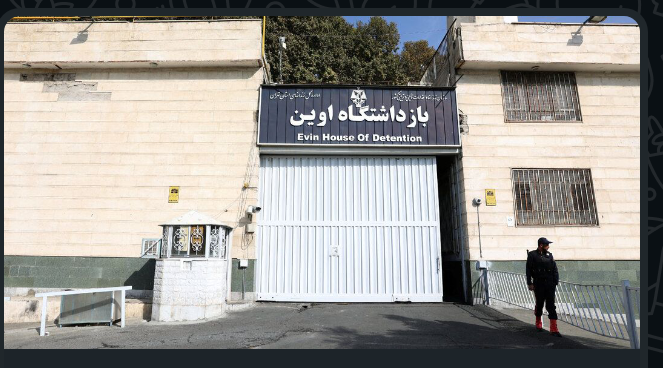
Iran Reports 71 Killed In Israeli Strike On Tehran’s Evin Prison.
Tehran, Iran – Iranian state media reported on Sunday that an Israeli air strike on Tehran’s notorious Evin Prison on 23 June 2025 resulted in the deaths of 71 people, including staff, young conscripts, detainees, visiting family members, and local residents. The attack, described as a significant escalation in the ongoing conflict between Israel and Iran, has drawn international attention to the targeting of a facility long associated with the detention of political prisoners and dissidents.
According to Iran’s judiciary spokesperson, Asghar Jahangir, the strike targeted Evin Prison, a sprawling complex in northern Tehran known for its harsh conditions and history of human rights abuses. The attack, which occurred on Monday, 23 June, was confirmed by multiple sources, including *Reuters* and *Middle East Eye*, with Iranian authorities claiming it killed a diverse group of victims, ranging from prison staff to civilians in the vicinity. The judiciary’s statement, reported by *The New York Times*, did not specify whether prominent political prisoners were among the casualties but noted the inclusion of foreign nationals held at the facility.


The strike comes amid heightened tensions, with Israel conducting a series of military operations against Iranian targets, including alleged missile production sites and air defence systems. Iranian state television reported that the attack on Evin was part of a broader Israeli offensive, which also damaged civilian infrastructure. Posts on X reflected outrage in Iran, with users condemning the strike as a violation of international law, though some expressed mixed sentiments, noting Evin’s reputation as a site of torture and oppression.
Evin Prison has long been a symbol of Iran’s crackdown on dissent, housing activists, journalists, and dual nationals, often under brutal conditions. Human rights organisations, such as Amnesty International, have documented cases of torture and arbitrary detention at the facility, making it a focal point of global criticism. The attack’s targeting of such a site has sparked debate, with some analysts suggesting it may have been intended to disrupt Iran’s internal security apparatus, while others view it as a provocative act risking further escalation.
Israel has not officially commented on the strike, but military sources cited by *The Jerusalem Post* indicated that the operation was part of a broader strategy to counter Iran’s regional influence. The attack’s high death toll and the symbolic significance of Evin have intensified calls for international investigations, with Iran’s foreign ministry vowing a “decisive response.”
The international community has expressed concern over the humanitarian implications. The United Nations urged restraint, while independent observers called for clarity on the status of prisoners, particularly those held for political reasons. The lack of detailed casualty lists has fuelled speculation, with posts on X questioning whether the strike inadvertently harmed dissidents or was aimed at specific high-value targets.
As the conflict continues, the attack on Evin Prison underscores the complex interplay of military strategy and human rights concerns. While Iran mourns the loss of life, the incident has also spotlighted the plight of those detained in the facility, with some advocates hoping it will prompt renewed global pressure for prison reform. For now, the region braces for potential retaliation, as the strike marks a grim milestone in the escalating Israel-Iran conflict.