


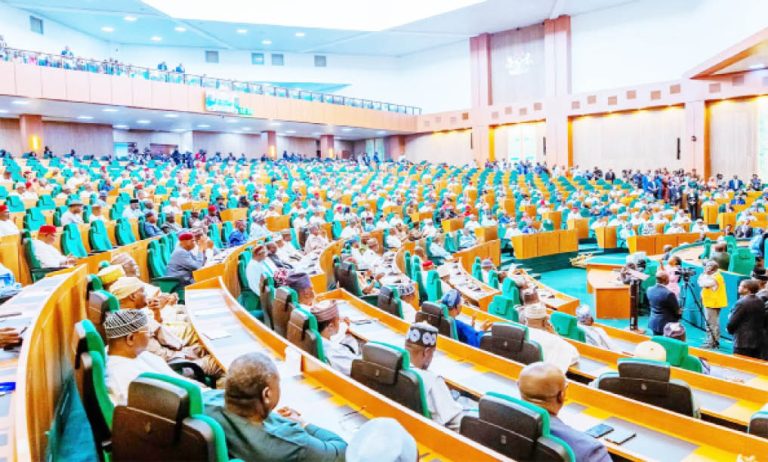
House Of Representatives Proposes CBT Centres In Every Nigerian Local Government For UTME.
The House of Representatives has urged the Joint Admissions and Matriculation Board (JAMB) to establish at least one Computer-Based Testing (CBT) centre in each of Nigeria’s 774 Local Government Areas (LGAs) to enhance access to the Unified Tertiary Matriculation Examination (UTME). The resolution, passed during a plenary session on Thursday, follows JAMB’s admission of technical errors in the 2025 UTME, which sparked widespread concern among candidates and stakeholders.
The lawmakers’ proposal aims to address longstanding challenges faced by UTME candidates, particularly those in rural areas, who often travel long distances to access CBT centres. The move is seen as a step towards ensuring equitable access to higher education and preventing future examination glitches. “Establishing CBT centres across all LGAs will make the process smoother and fairer for candidates,” said a lawmaker during the session, highlighting the need for infrastructure to support Nigeria’s growing number of tertiary education aspirants.


The decision comes in the wake of significant disruptions during the 2025 UTME, which saw over 1.5 million of the 2.03 million candidates scoring below 200, prompting allegations of technical failures, including login delays and system freezes. The House also called for calm among candidates and parents, urging JAMB to investigate and resolve these issues to restore confidence in the examination process.
This resolution aligns with earlier calls from the Senate, which in April 2025 proposed budgetary provisions for CBT centres in the 2026 fiscal year. Senator Mohammed Dandutse, Chairman of the Senate Committee on Tertiary Institutions and TETFUND, had noted that only two of the 11 LGAs in his Katsina South constituency had CBT facilities, underscoring the urgency of expanding access. JAMB’s spokesperson, Dr Fabian Benjamin, confirmed the board currently operates 880 CBT centres nationwide but acknowledged they do not cover all LGAs. “We would welcome support to establish centres in every LGA,” he said.
Education stakeholders have praised the initiative, with some describing it as a “game-changer” for rural students. However, concerns remain about funding and implementation. Utase Joseph Utase, a Lagos-based educational consultant, emphasized the need for adequate infrastructure and trained personnel to ensure the centres function effectively. “This is a positive step, but it must be backed by proper planning and resources,” he said.
The 2025 UTME, conducted from 24 April to 5 May, exposed systemic issues in Nigeria’s education sector, including inadequate facilities and poor preparation. The Congress of University Academics (CONUA) described the results as “disturbing,” calling for broader reforms. Candidates reported challenges such as malfunctioning computers and distant examination centres, which compounded their difficulties.
As the government moves to address these concerns, the establishment of CBT centres in every LGA could mark a significant milestone in improving access to tertiary education. The House has directed JAMB to collaborate with relevant agencies to develop a rollout plan, with expectations that budgetary provisions will be prioritized in 2026. For millions of Nigerian students, this initiative offers hope for a more inclusive and efficient UTME process in the years ahead.