


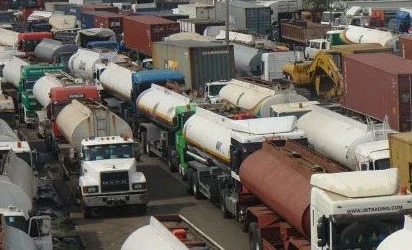
Federal Government Imposes Ban On Night Driving For Fuel Tankers In Nigeria.
In a move to enhance road safety and curb accidents, the Federal Government of Nigeria has announced an immediate ban on night driving for fuel tankers across the country. The directive, issued through the Nigerian Midstream and Downstream Petroleum Regulatory Authority (NMDPRA), restricts fuel tanker movements to daytime hours, specifically prohibiting operations after 6:00 PM.
The decision follows growing concerns over the high incidence of road accidents involving fuel tankers, particularly during nighttime hours when visibility is reduced and driver fatigue is more likely. The NMDPRA stated that the ban aims to mitigate risks associated with transporting highly flammable materials, safeguarding lives, property, and the environment.


“This is a proactive step to address the recurring issue of tanker-related accidents, which have caused significant loss of life and property damage,” an NMDPRA spokesperson said. “By limiting tanker movements to daylight hours, we aim to improve safety for all road users.”
The announcement has been met with mixed reactions. Industry stakeholders, including the Petroleum Tanker Drivers (PTD) branch of the Nigeria Union of Petroleum and Natural Gas Workers (NUPENG), have acknowledged the safety benefits but raised concerns about potential logistical challenges. “While we support measures to enhance safety, the restriction may disrupt supply chains, especially in regions heavily reliant on nighttime deliveries,” a PTD representative noted.
To address these concerns, the NMDPRA has outlined plans to work with stakeholders to ensure a smooth transition. The authority has also set September 2025 as the deadline for enforcing a related regulation banning the use of 60,000-litre fuel tankers, further demonstrating its commitment to modernising and securing fuel transportation.
Road safety advocates have welcomed the move, citing the potential to reduce accidents caused by poor visibility, driver error, or mechanical failures during night journeys. Data from the Federal Road Safety Corps (FRSC) indicates that a significant percentage of tanker-related crashes occur at night, often resulting in catastrophic fires and loss of life.
The public has been urged to comply with the new directive, with the NMDPRA warning that strict penalties will be imposed on violators. Enforcement agencies, including the FRSC and the Nigeria Police Force, are expected to monitor compliance closely.
This development marks a significant step in Nigeria’s ongoing efforts to improve road safety and protect communities from the dangers posed by fuel tanker accidents. The government has reaffirmed its commitment to implementing policies that prioritise the well-being of its citizens while maintaining the efficiency of the nation’s petroleum supply chain.