


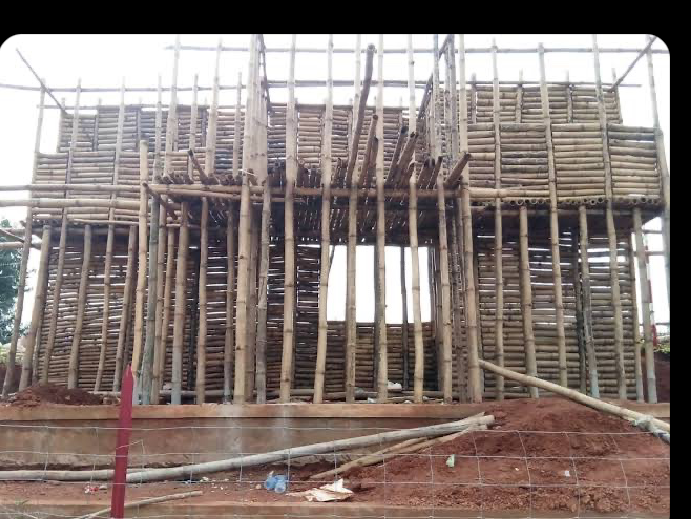
Federal Government Announces Plan To Build Bamboo Smart Homes For Low Income Earners.
The Federal Government’s latest announcement to construct affordable “smart houses” using bamboo for low and medium-income earners has sparked a mix of intrigue and scepticism across Nigeria. Unveiled by Mrs. Esuabana Nko Asanye, Permanent Secretary of the Federal Ministry of Innovation, Science and Technology, at a workshop in Abuja on Wednesday, the plan promises eco-friendly, durable homes to address the nation’s chronic housing shortage. But with scant details and a history of ambitious yet unfulfilled projects, many are questioning whether this is a genuine breakthrough or another lofty promise destined to falter.


Speaking through her representative, Mrs. Benadette Oguche, at the Nigerian Building and Road Research Institute (NBRRI) event themed “Relevance of Bamboo for Climate-Smart Housing Construction,” Mrs. Asanye touted bamboo as a sustainable solution to Nigeria’s housing crisis. She claimed the material, combined with unspecified “proven technologies,” would deliver affordable, adaptable, and environmentally friendly homes. Yet, the absence of a clear timeline, budget, or concrete implementation strategy has left analysts and citizens wary.
Nigeria’s housing deficit, pegged at over 28 million units by recent estimates, is a daunting challenge, exacerbated by rapid urbanisation and a population surpassing 228 million. Bamboo, while renewable and low-emission, is hardly a mainstream construction material in the country. Critics point out that scaling its use to meet national demand would require vast cultivation, processing infrastructure, and skilled labour—none of which were addressed in the announcement. Mrs. Asanye herself acknowledged hurdles like high initial costs and unreliable raw material supply, but her vague assurance that workshop insights would resolve these issues did little to inspire confidence.
The government’s Renewed Hope Agenda, which this project purportedly supports, has yet to deliver transformative results in housing or infrastructure. Without details on partnerships, pilot locations, or how bamboo will be sourced sustainably, the plan risks being perceived as a publicity stunt rather than a viable solution. Moreover, the term “smart houses” remains undefined—raising doubts about whether these homes will feature advanced technology or simply be basic structures with a green label.
Proponents argue that bamboo’s durability and low environmental impact could revolutionise construction, but sceptics counter that Nigeria’s housing crisis demands proven, scalable solutions, not experimental ventures. The ministry’s silence on how it will overcome logistical and economic barriers only fuels doubts. Will this initiative join the long list of Nigeria’s unfulfilled promises, or defy expectations? For now, the jury is out, and Nigerians are left waiting for more than just rhetoric.