


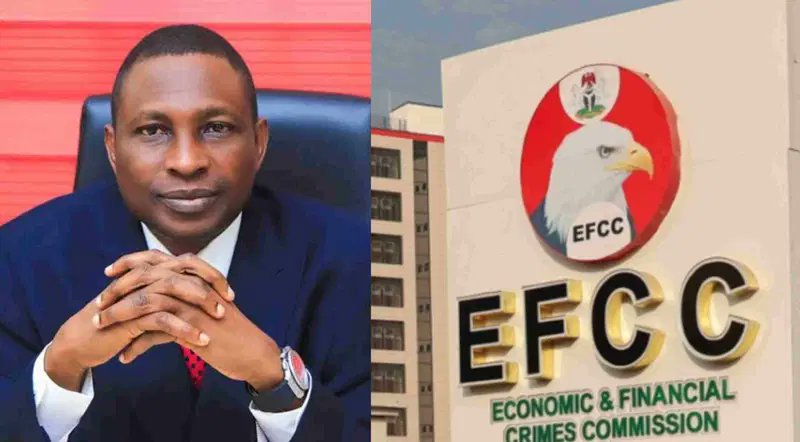
EFCC Hands Over Seized 750 Luxury Homes To Housing Ministry In Major Anti-Corruption Milestone.
The Chairman of the Economic and Financial Crimes Commission (EFCC), Ola Olukoyede, has officially handed over a confiscated luxury housing estate comprising 753 duplexes and apartments to the Federal Ministry of Housing and Urban Development. The ceremony, which took place today in Abuja, marks a historic moment in Nigeria’s ongoing fight against financial crime, with the government now poised to make these properties available for purchase by Nigerian buyers to recoup misappropriated funds.
The sprawling estate, located in Lokogoma, Abuja, and covering 150,500 square metres, was forfeited to the Federal Government following an EFCC investigation that began in 2024. The properties, allegedly acquired through illicit means by a former high-ranking government official, represent the largest single asset recovery in the EFCC’s 21-year history. While the EFCC has not publicly disclosed the identity of the former official, sources indicate the estate is linked to Godwin Emefiele, the former Governor of the Central Bank of Nigeria.


Speaking at the handover ceremony, Mr. Olukoyede underscored the significance of the recovery, stating, “This handover demonstrates the impact of the fight against financial crimes and corruption in Nigeria, as captured in the Renewed Hope Agenda of President Bola Ahmed Tinubu.” He highlighted that the investigation, which culminated in a civil forfeiture, was driven by the belief that no individual could have legitimately acquired such a vast estate. Olukoyede also emphasised the importance of transparency in managing recovered assets, noting, “It is crucial that the proceeds of crime are applied transparently to ensure looted assets are not looted again.”
The Minister of Housing and Urban Development, Arc. Ahmed Musa Dangiwa, who received the estate on behalf of the government, commended the EFCC’s efforts under Olukoyede’s leadership. “This marks a significant milestone in our collective determination to ensure that recovered assets are put to productive use for the benefit of the Nigerian people,” Dangiwa said. He revealed that the ministry would conduct a thorough assessment of the estate’s structural integrity and suitability for habitation, in collaboration with the EFCC, to prepare the properties for public sale.
The estate’s recovery was formalised in December 2024, when Justice Jude Onwuegbuzie of the Abuja High Court ruled in favour of its final forfeiture to the Federal Government. The ruling was grounded in Section 17 of the Advance Fee Fraud and Other Fraud Related Offences Act 2006 and Section 44(2)(B) of the Nigerian Constitution, reinforcing the EFCC’s mandate to ensure that the proceeds of unlawful activities are not enjoyed by the corrupt.
Social media posts on X have reflected public interest and optimism about the development, with users noting that the availability of over 750 luxury duplexes for purchase could provide housing opportunities for Nigerians while allowing the government to recover stolen funds. One user remarked, “This is a win for accountability and a step forward for Nigerians.” Another expressed curiosity about the sale process, stating, “I am very much interested in how the government intends to put these houses up for sale.”
The EFCC’s success in this case has been hailed as a powerful message to those who misuse public funds, demonstrating that ill-gotten wealth can be traced and reclaimed, no matter how well hidden. The agency’s focus on asset recovery, as articulated by Olukoyede, remains a cornerstone of its strategy to deter corruption and promote economic growth.
As the Federal Ministry of Housing prepares to assess and market the properties, Nigerians await further details on how these luxury homes will be made available. The government’s commitment to using recovered assets for public benefit signals a renewed push for transparency and accountability, offering hope that such efforts will contribute to Nigeria’s development and restore public trust.