


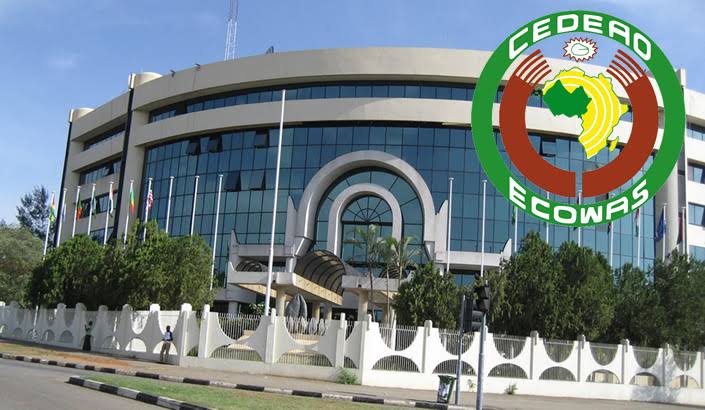
ECOWAS Court Orders Release Of Nigerian Businessman After 16 Years Without Trial.
In a landmark ruling, the ECOWAS Community Court of Justice has ordered the immediate and unconditional release of Moses Abiodun, a Nigerian businessman detained for 16 years without trial by the now-disbanded Special Anti-Robbery Squad (SARS). The court also awarded Abiodun N20 million in compensation for what it described as “multiple violations” of his fundamental human rights, marking a significant victory for justice and accountability in Nigeria.
Abiodun, aged 28 at the time of his arrest, was apprehended by SARS operatives in November 2008 in Sango, Ogun State, on suspicion of conspiracy and armed robbery. According to court documents, he was held for five months without charge before a Lagos Magistrate Court issued a remand order on 23 March 2009. Despite the passage of over a decade and a half, Abiodun was never formally charged, tried, or convicted, languishing in detention under conditions described as inhumane.

The case, marked ECW/CCJ/APP/56/22, was brought before the ECOWAS Court in 2022 by Abiodun’s counsel, Chigozie Uzodinma. Abiodun alleged that his prolonged detention violated his rights to liberty, freedom of movement, a fair trial, and protection from cruel, inhuman, and degrading treatment, as enshrined in the African Charter on Human and Peoples’ Rights and other international human rights instruments to which Nigeria is a party. The court’s three-member panel, presided over by Vice President Justice Sengu Mohamed Koroma, with Justices Gbéri-bè Ouattara and Edward Amoako Asante, unanimously ruled in his favour.
Delivering the judgement on 15 May 2025 in Lagos, the court found Nigeria liable for breaching Abiodun’s rights under Articles 5, 6, 7, and 12 of the African Charter and Article 9 of the International Covenant on Civil and Political Rights (ICCPR). The judges declared that detaining Abiodun for 16 years without trial constituted “anticipatory punishment” and amounted to inhuman and degrading treatment. The court dismissed the Nigerian government’s claims, which included denying knowledge of SARS and questioning the authenticity of the remand warrant, after accepting a certified true copy of the order submitted by Abiodun.
The ruling, secured with support from Avocats Sans Frontières France (ASF France) under its EU-funded SAFE project, has been hailed as a powerful reaffirmation of the right to due process. Angela Uwandu Uzoma-Iwuchukwu, ASF France’s Country Director in Nigeria, stated, “This decision exposes critical systemic failures in Nigeria’s justice system and underscores the urgent need for reform to prevent arbitrary detention.
Abiodun’s ordeal highlights the notorious legacy of SARS, a police unit disbanded in 2020 following nationwide #EndSARS protests against its widespread abuses, including unlawful arrests, extortion, and extrajudicial killings. The ECOWAS Court previously held Nigeria liable for rights violations during those protests, further spotlighting systemic issues in the country’s criminal justice system.
Now 44, Abiodun, who was diagnosed with tuberculosis while in custody, faces an uncertain future. Living with his aged father in a village, unemployed and in poor health, he has appealed for support to rebuild his life. “I want to work. I want to live again,” he told reporters. His mother, who fought tirelessly for his release, passed away during his detention.
The court’s order for N20 million in compensation has raised questions about whether any sum can truly redress the loss of 16 years. Human rights advocates, while welcoming the ruling, argue that it underscores the need for broader reforms to address Nigeria’s pretrial detention crisis, with nearly 80% of prison inmates awaiting trial, many for over a decade.
As Nigeria grapples with its justice system’s shortcomings, Abiodun’s case serves as a stark reminder of the human cost of systemic failures and a call for accountability, reform, and respect for fundamental rights across the region.
