


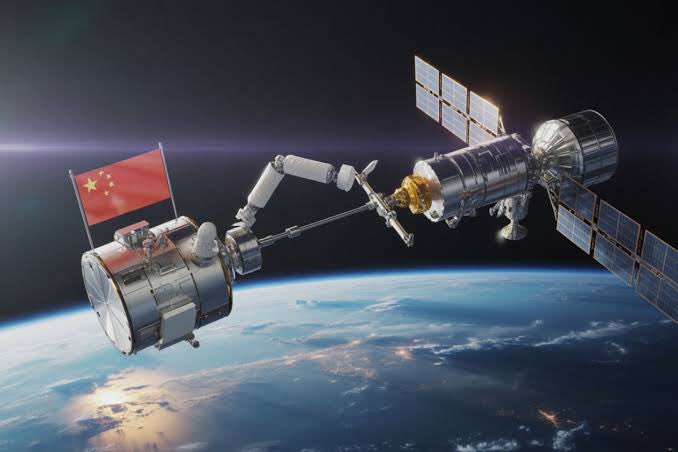
China Achieves World-First Satellite Refuelling In Orbit.
China has made history by becoming the first nation to successfully refuel a satellite in orbit, marking a significant milestone in space technology. The groundbreaking operation involved two Chinese satellites, Shijian-21 and Shijian-25, which docked in geosynchronous orbit approximately 22,000 miles above Earth on 2 July 2025. The achievement, observed by civilian satellite trackers, demonstrates China’s growing prowess in space operations and could transform the future of satellite sustainability.
The Shijian-25 satellite, launched in January 2025, was designed by the Shanghai Academy of Spaceflight Technology to test on-orbit refuelling and mission extension technologies. It rendezvoused with Shijian-21, a satellite launched in 2021 that had previously towed a defunct Beidou navigation satellite to a graveyard orbit. Optical tracking data from firms like COMSPOC and s2a systems confirmed that the two satellites merged into a single object on 2 July, suggesting a successful docking and potential fuel transfer. While Chinese officials have not officially confirmed the refuelling, the sustained connection between the satellites points to a historic breakthrough.


This achievement has far-reaching implications for space exploration and satellite management. Refuelling satellites in orbit could extend their operational lifespans, reducing the need for costly replacements and mitigating the growing problem of space debris. Experts estimate that such technology could save millions in launch costs and enhance the sustainability of space operations. Brian Weeden from the Secure World Foundation described the capability as “incredibly important,” noting its potential to revolutionise satellite maintenance.
The operation also underscores China’s advancing space programme, which includes crewed missions, lunar exploration, and the Tiangong space station. However, the dual-use nature of the technology has raised concerns among international observers. The ability to dock and refuel satellites could, in theory, be adapted for military purposes, such as inspecting or disabling foreign satellites. The US Space Force, which has been monitoring the operation with its own satellites, is planning its first orbital refuelling mission in 2026, indicating a growing global interest in this technology.
As China continues to push the boundaries of space innovation, this milestone highlights its position as a leader in orbital operations. The successful refuelling of Shijian-21 by Shijian-25 not only showcases technical expertise but also paves the way for more sustainable and cost-effective space missions in the future.