

Burkina Faso’s Captain Ibrahim Traoré: The Revolutionary Leader Captivating A Continent.
Captain Ibrahim Traoré, Burkina Faso’s 37-year-old military ruler, has emerged as a global icon, his fiery rhetoric and bold reforms igniting admiration across Africa and beyond. Clad in beige fatigues and a red beret, the charismatic leader channels the spirit of Thomas Sankara, the nation’s Marxist revolutionary revered as “Africa’s Che Guevara.” Since seizing power in a 2022 coup, Traoré has positioned himself as a pan-Africanist determined to liberate Burkina Faso from what he calls Western imperialism and neo-colonialism.
“Traoré’s impact is immense,” said Beverly Ochieng, a senior researcher at Control Risks. “Politicians and authors from as far as Kenya are saying, ‘This is it. He is the man.’ His message resonates in an era when Africans question why poverty persists in a resource-rich continent.”


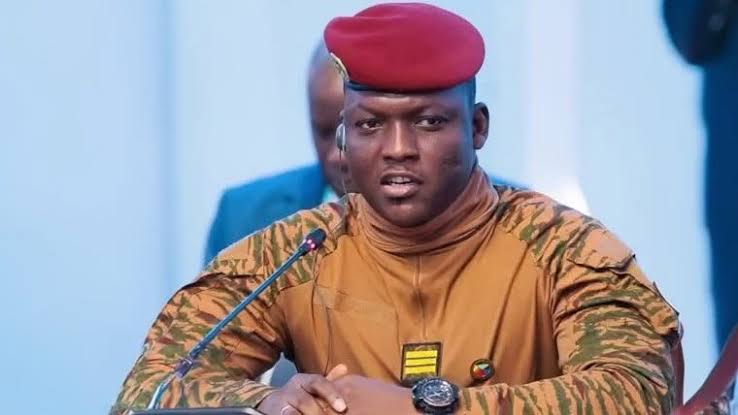

Traoré’s regime has pivoted sharply from France, the former colonial power, forging a robust alliance with Russia, complete with a Russian paramilitary brigade. His left-wing policies include a state-owned mining company that demands a 15% stake from foreign firms and mandates skills transfer to Burkinabé workers. Even Russian miner Nordgold, recently granted a licence, complies. Traoré’s “revolution” to harness Burkina Faso’s mineral wealth also features a new gold refinery and the nation’s first gold reserves.
Western firms, however, face mounting challenges. Australia’s Sarama Resources initiated arbitration in late 2024 after losing an exploration licence, while two gold mines previously owned by a London-listed company were nationalised. Last month, the junta signalled plans to seize more foreign-owned mines. “Traoré’s radical reforms have made him arguably Africa’s most popular president,” said Enoch Randy Aikins, a researcher at South Africa’s Institute for Security Studies.
His popularity, amplified by a slick social media campaign, transcends borders. At the 2023 Russia-Africa summit, Traoré’s call to African leaders to “stop behaving like puppets” of imperialists, heavily promoted by Russian media, captivated the continent. Last week, he joined military leaders from Mali and Niger in Russia to commemorate the Soviet victory over Nazi Germany, posting on X that it inspired their fight against “terrorism and imperialism at all costs.”
Social media has fuelled Traoré’s mystique, with AI-generated videos falsely depicting stars like Rihanna and Beyoncé celebrating him. His message of resistance to colonialism and racism resonates globally, including among African-Americans and Black Britons. Rapper Meek Mill praised Traoré’s “energy and heart” on X last year, though he later deleted the post after mistakenly calling him “Burkina Faso.”
Not everyone is enamoured. French President Emmanuel Macron has decried Traoré’s ties to Russia and China, accusing them of orchestrating coups in former French colonies. Domestically, Traoré’s failure to quell a decade-long Islamist insurgency, which has deepened ethnic divisions and spread to Benin, undermines his pledges. His junta’s crackdown on dissent—silencing opposition, media, and sending critics like medics and magistrates to jihadist front lines—has drawn condemnation.
Yet Traoré’s youth—he governs a nation with a median age of 17.7—lends him unique appeal. “He’s media-savvy, portraying himself as Sankara reborn,” said Rinaldo Depagne of the International Crisis Group. “He knows how to make a war-traumatised nation believe in a brighter future.” Sankara, who seized power at 33 and was assassinated in 1987, remains a towering figure for his integrity.
Traoré’s charisma shone at Ghana’s presidential inauguration in January 2025, where, pistol holstered, he outshone 21 heads of state. “The room lit up,” recalled Ghanaian analyst Prof Kwesi Aning. “Even my president’s bodyguards chased him.” Aning attributes Traoré’s appeal to a broader African shift, with a 2024 Afrobarometer survey showing declining support for democracy. “Democracy hasn’t delivered jobs or health for the youth,” he said. “Traoré offers an alternative, echoing leaders like Kwame Nkrumah and Sankara.”
Economically, the junta has made strides. The IMF predicts a “robust” economy in 2025, praising increased spending on education and health. The World Bank notes a drop in extreme poverty to 24.9%, driven by agriculture and services, despite inflation rising to 4.2% in 2024. Relations with the West, however, remain tense. U.S. General Michael Langley recently claimed Traoré uses gold reserves to protect his junta, not the nation—a charge that sparked outrage, especially after a foiled coup allegedly linked to Ivory Coast, where Langley visited soon after.
The junta seized the moment, rallying thousands in Ouagadougou against “imperialists and their lackeys.” Musician Ocibi Johann told the Associated Press, “They lied about Iraq and Gaddafi, but their lies won’t touch us now.” Solidarity rallies erupted in London, with Traoré thanking supporters on X for backing his vision of a “sovereign Africa.”
Traoré, alongside juntas in Mali and Niger, is reshaping West Africa, expelling French troops, exiting Ecowas, and imposing trade tariffs. Yet Aikins warns that, like Ghana’s Jerry Rawlings, whose 19-year rule left a mixed legacy, Traoré risks faltering without peace and strong institutions. For now, this young captain has sparked a movement, but his revolution’s fate hangs in the balance.
Quotes Credit: BBC