

Nigeria Boosts Energy Sector With Approval Of Three New Petrochemical Refineries.
In a significant step towards energy self-sufficiency, the Federal Government of Nigeria has granted licences for the construction of three new petrochemical refineries, a move set to bolster the nation’s refining capacity and reduce its reliance on imported fuel. The announcement, made on Sunday, has been hailed as a landmark decision in Nigeria’s ongoing efforts to harness its vast oil resources for domestic benefit.
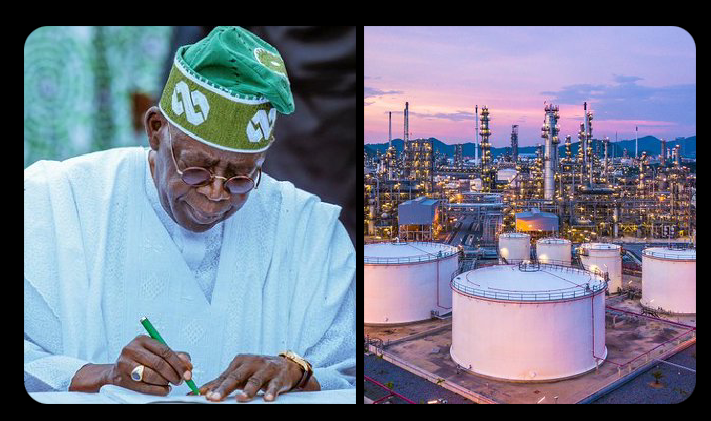

The Nigerian Midstream and Downstream Petroleum Regulatory Authority (NMDPRA) confirmed that the licences were awarded to three companies: Eghudu Refinery Ltd, MB Refinery and Petrochemicals Company Ltd, and HIS Refining and Petrochemical Company Ltd. These refineries, to be located in Edo, Delta, and Abia States respectively, will collectively add 140,000 barrels per day (bpd) to Nigeria’s refining capabilities once operational.


Eghudu Refinery Ltd, based in Edo State, has been authorised to construct a 100,000 bpd facility, making it the largest of the trio. MB Refinery and Petrochemicals Company Ltd, situated in Delta State, will develop a 30,000 bpd refinery, while HIS Refining and Petrochemical Company Ltd in Abia State will build a 10,000 bpd plant. The projects are expected to create thousands of jobs, stimulate local economies, and enhance Nigeria’s position as a key player in Africa’s energy landscape.
The NMDPRA’s Chief Executive, Engr. Farouk Ahmed, presented the licences to the managing directors of the respective companies in a ceremony that underscored the government’s commitment to industrial growth. “These licences mark a pivotal moment for Nigeria’s energy sector,” Ahmed stated. “With an additional 140,000 barrels per day, we are taking bold strides towards meeting domestic demand and positioning Nigeria as a refining hub in the region.”
This development comes on the heels of recent progress in Nigeria’s refining sector, most notably the operational success of the Dangote Refinery in Lagos. Commissioned in May 2023, the 650,000 bpd facility—the largest single-train refinery in the world—began producing petrol in September 2024, significantly reducing the country’s dependence on fuel imports. Analysts suggest that the addition of these three new refineries will complement such efforts, further easing pressure on foreign exchange reserves previously drained by fuel importation costs.
Nigeria, Africa’s largest oil producer, has historically struggled with underperforming state-owned refineries, forcing the nation to import most of its refined petroleum products despite its abundant crude oil reserves. The approval of these new facilities aligns with President Bola Tinubu’s administration’s broader policy to liberalise the energy market and attract investment. Over the past year, the NMDPRA has issued a total of nine licences to establish modular refineries, seven licences to construct, and four licences to operate, reflecting a concerted push to expand capacity.
Industry experts have welcomed the news, noting its potential to drive economic growth. “This is a game-changer,” said Dr. Adeola Akinwumi, an energy analyst based in Lagos. “Not only will it reduce our import bill, but it will also create a ripple effect—jobs, infrastructure development, and increased investor confidence. The challenge now lies in ensuring timely execution and operational efficiency.”
The refineries are expected to produce a range of petrochemical products, including petrol, diesel, and aviation fuel, with surplus capacity potentially earmarked for export. Local communities in Edo, Delta, and Abia States are already anticipating the economic benefits, with state governments pledging support to ensure the projects’ success.
While no specific timeline for completion was provided, the NMDPRA has assured stakeholders that it will work closely with the companies to streamline regulatory processes and facilitate construction. The announcement has sparked optimism across Nigeria, with many viewing it as a concrete step towards energy independence and a stronger economy.
As the nation awaits further details on the projects’ progress, one thing is clear: Nigeria’s energy future is looking brighter than ever.