


Lagos Court Awards ₦10 Million To #EndSARS Protesters For Rights Violations.
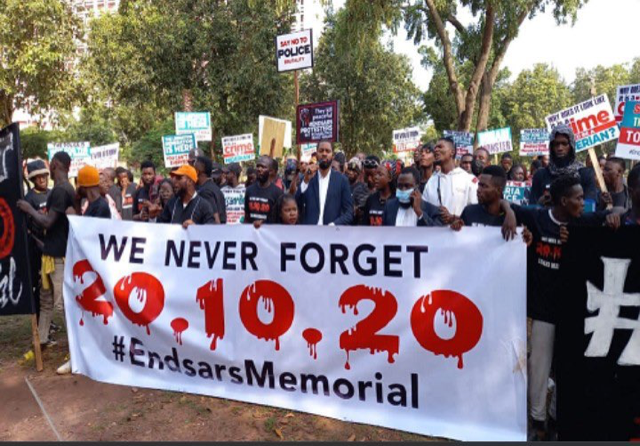
The Federal High Court in Lagos has delivered a landmark ruling, ordering the Inspector-General of Police (IGP) and the Lagos State Commissioner of Police to pay ₦10 million in damages to a group of #EndSARS protesters for violating their fundamental rights. The judgement, handed down on Thursday, 24 July 2025, by Justice Musa Kakaki, stems from a suit filed by activists who faced harassment during the fourth anniversary memorial of the #EndSARS protests on 20 October 2024.


The court found that the protesters, including Hassan Taiwo Soweto, Uadiale Kingsley, Ilesanmi Kehinde, Osopale Adeseye, Olamilekan Sanusi, and Osugba Blessing, among others, were unjustly targeted by police while peacefully commemorating the 2020 #EndSARS movement at the Lekki tollgate. Justice Kakaki ruled that the police’s actions breached the protesters’ constitutional rights to freedom of peaceful assembly and association, as guaranteed under Section 40 of the 1999 Constitution. The judge emphasised that while law enforcement holds powers to maintain order, such authority must align with democratic principles and the rule of law.
The case, supported by civil rights groups like the Education Rights Campaign, Take It Back Movement, and the Committee for the Defence of Human Rights, highlighted the unlawful arrest and detention of at least 20 individuals during the memorial rally. Protesters were held in a police van for hours without charges, an act the court deemed a “blatant infringement” on their rights. The ₦10 million compensation, to be shared among the applicants, serves as both redress and a warning against future suppression of peaceful dissent.
This ruling echoes earlier efforts to address police misconduct in Nigeria, following the 2020 #EndSARS protests that exposed widespread brutality by the now-disbanded Special Anti-Robbery Squad (SARS). The Lagos State Judicial Panel of Inquiry, established in response, had previously awarded compensation to victims of SARS abuses, setting a precedent for holding security forces accountable.
Human rights advocates have hailed the decision as a victory for justice, though many stress that systemic reforms are still needed to curb police overreach. The judgement arrives amid ongoing debates about state responses to dissent, with some linking the #EndSARS memorial crackdown to broader attempts to silence activism. As Nigeria grapples with its history of protest and reform, this ruling underscores the judiciary’s role in upholding citizens’ rights against unlawful state actions.