


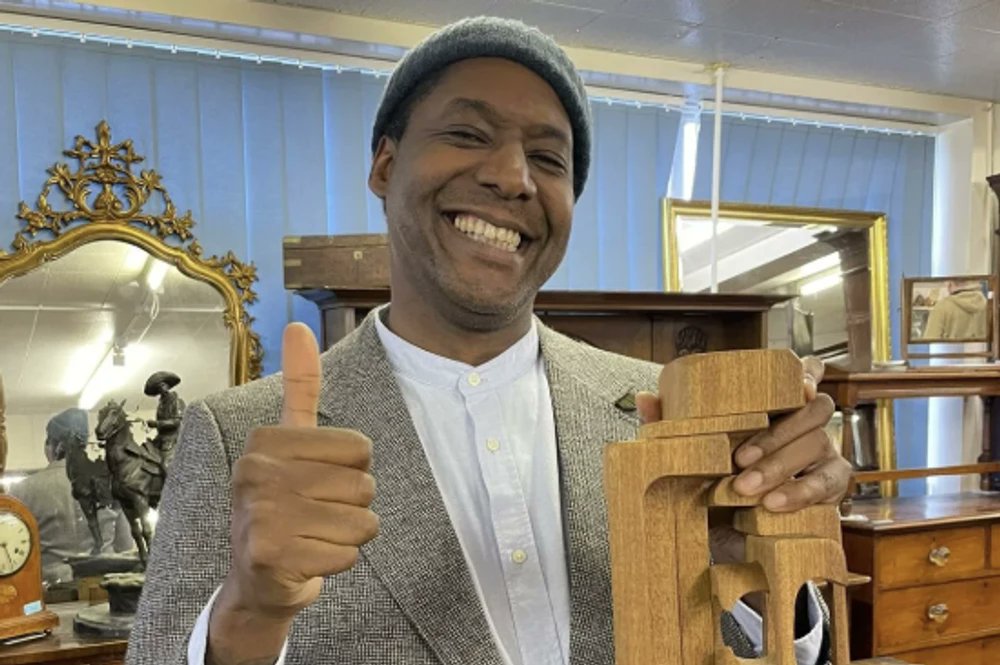
Bargain Hunt Art Dealer Pleads Guilty To Terror Financing Charges.
An art dealer known for his appearances on the BBC’s Bargain Hunt and Antiques Road Trip has admitted to failing to report transactions linked to terrorist financing, following a two-year investigation by the Metropolitan Police. Oghenochuko “Ochuko” Ojiri, 53, pleaded guilty to eight counts of failing to disclose information during the course of business within the regulated sector, under section 21A of the Terrorism Act 2000, at Westminster Magistrates’ Court on Friday.
The court heard that Ojiri, from west London, sold artworks worth approximately £140,000 to Nazem Ahmad, a suspected financier of Hezbollah, a proscribed terrorist organisation in the UK. Prosecutor Lyndon Harris revealed that Ojiri was fully aware of Ahmad’s designation as a sanctioned individual by the United States at the time of the transactions, which took place between October 2020 and December 2021. “Mr Ojiri accessed news reports about Mr Ahmad’s designation and engaged in discussions with others about his designation,” Harris told the court. He added that in one conversation, it was clear that “a lot of people have known for years about [Ahmad’s] terrorism links.”

Each of the eight charges related to individual sales of artwork, which were shipped to Dubai, UAE, and Beirut, Lebanon. Harris detailed how Ojiri “dealt with Mr Ahmad directly, negotiated the sales of artwork, and congratulated him on those sales,” highlighting the extent of their business relationship. The prosecution noted that Ojiri’s actions persisted despite new anti-money laundering regulations introduced in January 2020, which brought the art market under stricter scrutiny by HM Revenue and Customs (HMRC).
The investigation, led by the Met’s National Terrorist Financial Investigation Unit (NTFIU) alongside the Office of Financial Sanctions Implementation (OFSI), HMRC, and the Met’s Arts & Antiques Unit, marked the first time charges have been brought under section 21A of the Terrorism Act. This legislation requires individuals in regulated sectors to report suspicious financial activity potentially linked to terrorism.
Ojiri, who also founded the Ojiri Gallery (formerly Ramp Gallery) in east London, initially denied knowledge of Ahmad’s notoriety when arrested in April 2023. However, in a subsequent interview in July 2023, he admitted to police that he was aware of the sanctions, citing the “excitement and kudos” of dealing with a prominent figure in the art world as his motivation, rather than financial gain. He expressed remorse, stating he did not support terrorist activity.
District Judge Briony Clarke granted Ojiri bail but ordered him to surrender his passport and refrain from applying for international travel documents. His mitigation lawyer, Gavin Irwin, argued that Ojiri posed no flight risk, noting, “The fact that he is here – he has left the UK and has always returned knowing he may be charged with offences – he will be here on the next occasion.”
Ojiri’s sentencing is scheduled for 6 June at the Old Bailey, where each offence carries a maximum penalty of five years’ imprisonment. The case has drawn significant attention due to Ojiri’s public profile as a charismatic antiques expert, known for his enthusiastic demeanour and passion for contemporary African and European art. He has not appeared on BBC programmes since 2023, and a BBC spokesperson declined to comment, stating, “It would not be appropriate to comment on ongoing legal proceedings.”
The Metropolitan Police emphasised the significance of the case, with a spokesperson stating, “This prosecution underscores our commitment to tackling terrorist financing through all sectors, including the art market, and ensuring compliance with regulations designed to protect national security.”
As the art world and Bargain Hunt viewers await the sentencing, the case serves as a stark reminder of the importance of due diligence in high-value transactions within regulated industries.
