


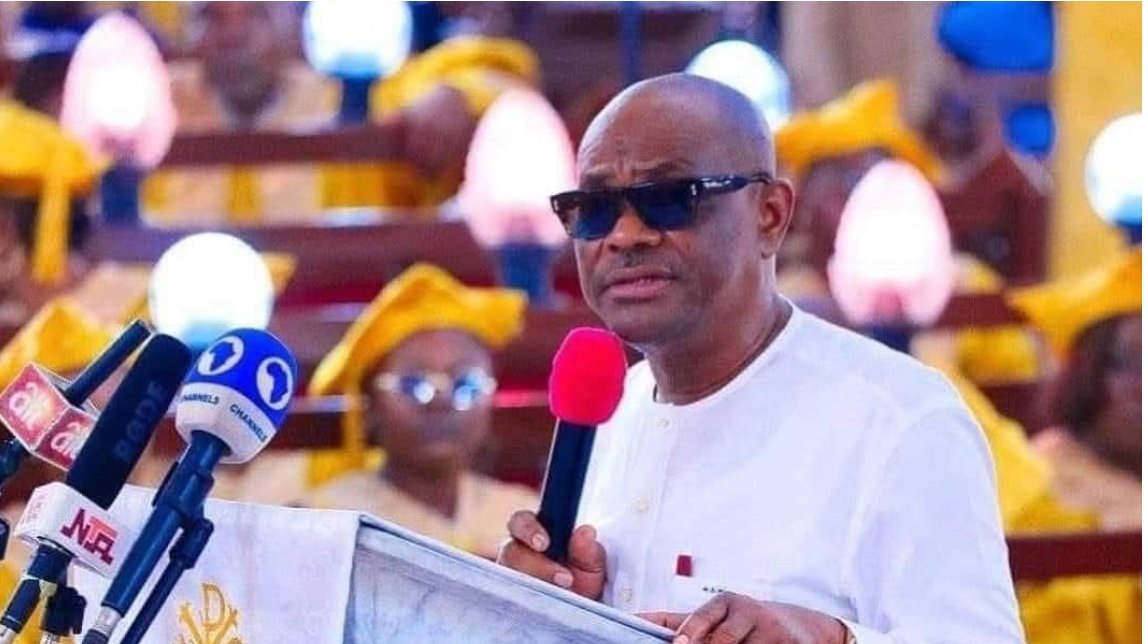
Anglican Church In Nigeria Prohibits Political Speeches From Pulpits Following Wike’s Controversial Remarks.
The Church of Nigeria (Anglican Communion) has introduced a significant new policy, banning politicians and government officials from using its pulpits for political speeches or campaign-related remarks. The decision, announced in a memo signed by the Primate of the Church, The Most Revd Dr Henry Ndukuba, comes in response to a recent incident involving Nyesom Wike, the Minister of the Federal Capital Territory (FCT), during a thanksgiving service at St James’ Anglican Church in Asokoro, Abuja.
The directive, effective immediately across all Anglican dioceses in Nigeria, follows widespread criticism of Wike’s remarks on 6 July 2025, when he used the church platform to launch politically charged comments. During the service, held to mark the completion of infrastructure projects under President Bola Tinubu’s administration, Wike criticised the church for nearly making a “costly mistake” in the 2023 general elections and attacked Labour Party presidential candidate Peter Obi, declaring that he would “never be president.” These statements, which also included remarks about Nigeria’s state before Tinubu’s tenure, sparked outrage among worshippers and the public, with many labelling them as a desecration of the sacred space.

The Church’s new guidelines aim to safeguard the sanctity of its worship spaces and maintain its neutrality in political matters. The memo, issued after an episcopal consultation in the Diocese of Nike, Enugu State, underscores the Church’s concern over the growing trend of religious platforms being used for partisan messaging. It explicitly states that the lectern, a consecrated space reserved for reading the word of God, is “out of bounds” for political rhetoric. Church leaders are now required to hold prior discussions with any guest intending to address the congregation, clearly stipulating that the pulpit must not be used for political propaganda.
Korede the Church’s Director of Communication, clarified that Wike was invited to share testimonies related to his administration’s projects, not to engage in political commentary. The Church distanced itself from his remarks, stating they did not reflect the views of the parish leadership or the wider Anglican Communion. Reports also indicate that during the service, subtle signals were given to Wike to redirect or conclude his speech, which he ignored, further intensifying the controversy.
The decision has been widely welcomed by many Nigerians, who see it as a step towards restoring the sanctity of religious spaces. Social commentator Sir Ifeanyi Ejiofor, a Knight of St. Christopher in the Anglican Communion, described Wike’s actions as “reckless vituperation” and a “national embarrassment,” urging other denominations to follow the Anglican Church’s lead. Some have called for disciplinary measures against clergy who allow such breaches, arguing that the responsibility lies with both the speaker and the church leadership.
The Anglican Communion reaffirmed its commitment to engaging with government authorities on matters of public interest while maintaining its non-partisan stance. The guidelines emphasize creating a welcoming atmosphere for all, including political figures, but without compromising the Church’s core values or divine mandate. As the Church of Nigeria takes this bold step, it sets a precedent that may inspire other religious bodies to address the intersection of faith and politics with similar resolve.
